About 586 minutes
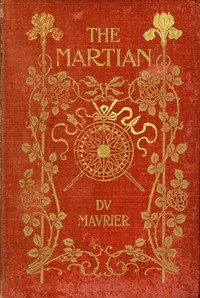
The Martian: A Novel — Reading Companion
Machines Inventions Early Science Fiction
134,606 recorded words. 81 minutes difference from this book's estimate.
View Gutenberg source #27400
The catalog record for The Lamplighter — Reading Companion provides practical reading context through 153,331 words, 11 hr 7 min estimated reading time, and 13 detected text sections.
The text analysis averages about 18.5 words per sentence, while the detected sections provide another way to judge how the source is divided.
Project Gutenberg metadata also associates the work with “Orphans -- Fiction,” connecting these edition facts with the source record’s subject description.
Explore this collection
These alternatives are selected using recorded categories and estimated reading time.
About 586 minutes
Machines Inventions Early Science Fiction
134,606 recorded words. 81 minutes difference from this book's estimate.
View Gutenberg source #27400About 327 minutes
Machines Inventions Early Science Fiction
75,015 recorded words. 340 minutes difference from this book's estimate.
View Gutenberg source #33277About 326 minutes
Machines Inventions Early Science Fiction
74,860 recorded words. 341 minutes difference from this book's estimate.
View Gutenberg source #20628Search stored excerpts and compare books → Choose by your preferences →
Choices use stored catalog measurements. Estimates vary with reading speed. A shared category is a catalog label, not a claim that two books have the same argument or literary quality.
Search reads excerpt text stored with this catalog and links to its associated Gutenberg record. The connection is stored in the site database; this tool does not recheck that every excerpt is word-for-word identical to that external record. Excerpt search does not cover every chapter and does not verify historical publication dates.
Catalog snapshot checked: 2026-09-25. Coverage: 95 public books, 95 available source excerpts.
Read the complete public-domain text at its original source.
Read on Project GutenbergThe Lamplighter opens with a child on a doorstep in the November dusk, her unshod feet on cold bricks, while the city grows dark around her. The narrator immediately establishes a contrast between the light that would linger in open country and the premature gloom of narrow streets. This recurring opposition between light and darkness, interior and exterior, structures the novel not merely as a sentimental education but as a spatial and moral geography. The orphan Gertrude is first seen gazing up the street, a posture of waiting that will be repeated throughout the book. The lamplighter of the title, who appears later, is only one of several figures who bring literal or figurative illumination into her world.
The first chapter is titled "Light in Darkness," and the novel's chapter headings repeatedly invoke visual and moral chiaroscuro: "Mental Darkness," "Brightening Prospects," "The Vision." The opening scene establishes a city where darkness falls early and the child sits unnoticed, her fine dark eyes contrasting with her sallow complexion. Later, when Gertrude is invited on a walk to Sunset Hill, the name itself suggests a landscape where light and transition are central. The narrator frequently notes the time of day and the quality of light—dusk, growing cool, a light fall of snow—as markers of emotional tone. These details are not merely atmospheric; they create a pattern in which moral clarity is associated with physical illumination, and confusion or neglect with shadow.
The excerpts show characters constantly moving between houses, doorsteps, fields, and woods. Gertrude is first seen on a doorstep, a threshold between the dark interior and the public street. Later, she searches for a missing hat, borrows a sun-bonnet, and debates whether to join a walk through the woods. The novel's structure depends on such transitions: from the low-roofed house to the Graham home, from the city to the country, from indoors to outdoors. These movements are never casual; they carry social and moral weight. When Gertrude hesitates to join the walking party, the negotiation over who knows the path becomes a subtle drama of inclusion and exclusion. The meadow that is a quagmire, passable only by keeping close to the wall, is a physical obstacle that also tests the characters' willingness to help one another.
Small material details recur with precision. In the opening, the child's unshod feet rest on cold bricks; later, Gertrude changes into thick walking boots and searches for a flat hat. Emily asks whether she has thick shoes for the wet meadow, and Gertrude offers india-rubbers to the others. These details are not random. They signal preparedness versus vulnerability, care versus neglect. The missing hat and borrowed sun-bonnet become small tests of resourcefulness and generosity. The narrator lingers on the practicalities of dress and footwear, grounding the moral drama in the physical world. A character who forgets her hat or lacks proper shoes is, in this novel, a character who may also lack foresight or consideration for others.
The walking party in chapters 28-29 reveals social hierarchies through physical positioning. Belle and the lieutenant walk slowly in the rear, willing to be left behind; Mr. Bruce and Kitty hasten ahead, seeking a tête-à-tête; Gertrude and Fanny lag behind, out of breath. The narrator notes that Ben Bruce purposely conceals his knowledge of the path to force an invitation for Gertrude, then increases his attention to Kitty when Gertrude appears. The meadow becomes a stage for jealousy, manipulation, and unspoken competition. The whispered consultation about whether to invite Gertrude, and the debate over who knows the way, show how spatial movement encodes social negotiation. The novel uses the simple act of walking through a field to dramatize the characters' desires, deceptions, and alliances.
Readers attentive to the novel's structure will find that its moral lessons are embedded not in explicit sermons but in the arrangement of scenes and the recurrence of small, concrete details. The movement from darkness to light, from doorstep to drawing room, from isolation to community, is the story's true argument. Pay attention to who stands where, who walks ahead, and who is left behind; the novel's geography is its ethics.
Reading about Gertrude’s lamp-lit window, I remembered my grandmother’s parlor lamp, how its glow made the dark hall beyond feel softer, more navigable. That same quiet pull toward shelter appeared in Torchy and Vee — Background and Themes, where home isn’t a place so much as a held breath of waiting light. Both books feel like sitting very still, watching someone find their way back.
Build a private reading journal entry for this title.