About 195 minutes
The Perfume of Eros: A Fifth Avenue Incident — Edition Insights
Machines Inventions Early Science Fiction
44,692 recorded words. 13 minutes difference from this book's estimate.
View Gutenberg source #33207
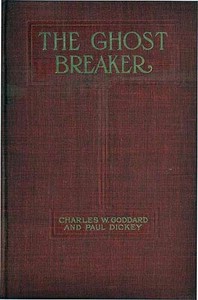
The source record for The Ghost Breaker: A Novel Based Upon the Play — Edition Insights measures this digital text at 47,798 words, 3 hr 28 min estimated reading time, and 6 detected text sections.
The text analysis averages about 12.7 words per sentence, while the detected sections provide another way to judge how the source is divided.
Project Gutenberg metadata also associates the work with “Detective and mystery stories,” connecting these edition facts with the source record’s subject description.
Explore this collection
These alternatives are selected using recorded categories and estimated reading time.
About 195 minutes
Machines Inventions Early Science Fiction
44,692 recorded words. 13 minutes difference from this book's estimate.
View Gutenberg source #33207About 243 minutes
Machines Inventions Early Science Fiction
55,889 recorded words. 35 minutes difference from this book's estimate.
View Gutenberg source #27888About 255 minutes
Machines Inventions Early Science Fiction
58,494 recorded words. 47 minutes difference from this book's estimate.
View Gutenberg source #28439Search stored excerpts and compare books → Choose by your preferences →
Choices use stored catalog measurements. Estimates vary with reading speed. A shared category is a catalog label, not a claim that two books have the same argument or literary quality.
Search reads excerpt text stored with this catalog and links to its associated Gutenberg record. The connection is stored in the site database; this tool does not recheck that every excerpt is word-for-word identical to that external record. Excerpt search does not cover every chapter and does not verify historical publication dates.
Catalog snapshot checked: 2026-09-25. Coverage: 95 public books, 95 available source excerpts.
Read the complete public-domain text at its original source.
Read on Project GutenbergThe novel opens with a thunderous arrival at a darkened Southern manor, where Warren Jarvis returns to find his father in fear of the Marcums. The scene is steeped in Gothic tension—a sobbing servant, extinguished lights, a weak voice calling from within. But the tone quickly pivots: Jarvis's first act is to light a lamp and demand explanations, establishing him as a man of action rather than superstition. This blend of melodrama and practical resolve sets the stage for a story that will later trade Kentucky shadows for Spanish castle intrigue.
The early chapters establish Warren Jarvis as a man caught between two worlds. His father's fear of the Marcums suggests a family feud, but the narrative soon abandons this thread for a transatlantic voyage. On board, Jarvis encounters a Spanish princess, Maria Theresa, and their dialogue reveals the novel's central tension: American pragmatism versus European aristocracy. Jarvis's critique of American title-collecting—'enough majors, colonels, and generals to officer the armies of Europe'—is delivered with a cynicism that the princess struggles to follow. Yet his analytical powers earn her grudging respect, even as he oversteps with a remark about her title changing 'before another year.' The scene is a verbal sparring match, punctuated by Jarvis's retreat to his stateroom to study Baedeker and Spanish customs, signaling that his bravado is backed by preparation.
Midway through the excerpts, Jarvis adopts the moniker 'Warren the Ghost Breaker,' a title he claims is known 'from Bowling Green to the Golden Gate.' This self-appointed profession—debunking supernatural claims—becomes the engine of the plot. The novel's structure shifts from travelogue to a wager with the Duke, who likely challenges Jarvis to investigate a haunted castle. The excerpts show Jarvis studying Spain with 'the same application which had carried him over the thin ice of college examinations,' suggesting a methodical mind beneath his swagger. His sidekick Rusty provides comic relief, while the princess oscillates between admiration and offense. The dialogue remains the primary vehicle for character development, with Jarvis's quips—such as comparing American heraldry to 'second-hand jewelers'—revealing a satirical edge that undercuts the Gothic atmosphere.
Later excerpts place Jarvis in a Spanish castle, where the promised ghost-breaking begins. The setting is ripe with mystery: treasure troves, locked rooms, and a broken lock that prompts Jarvis's question, 'How did that lock get broken?' The illustrations hint at confrontations—a man caught by the arm, a chair wielded as a weapon, and a cry of 'Don't shoot!'—but the text excerpts focus on verbal duels rather than physical action. Jarvis's palm-reading scene ('Ah, señor, in all my experience I have never seen such an adventurous palm') suggests he uses psychology as much as brawn. The novel's tone remains light, with Jarvis's American confidence clashing against Spanish superstition. The princess's earlier accusation of presumption—'For a vassal, you are decidedly presumptuous'—echoes through these scenes, as Jarvis continues to challenge authority with a smile.
Throughout the excerpts, Jarvis embodies a distinctly American archetype: the self-made hero who respects no title but his own reputation. His speech to the princess—'a republic is at least well illuminated. We're not afraid of the light!'—frames his ghost-breaking as a democratic mission, dispelling darkness both literal and figurative. Yet the novel does not entirely endorse his brashness; the princess's cold 'Good-night' after his impertinent remark shows that his charm has limits. The excerpts end with Jarvis quoting Kipling's 'For Julia O'Grady and the Colonel's lady,' a ballad about universal human nature, suggesting that beneath the comedy lies a serious point about class and identity. Readers should watch how Jarvis's confidence either wins over the castle's inhabitants or leads him into traps that require more than wit to escape.
The Ghost Breaker rewards readers who enjoy dialogue-driven adventure with a hero who talks his way through danger. Pay attention to how the novel balances its Gothic trappings—dark castles, hidden treasures, family curses—with Jarvis's irreverent humor. The excerpts suggest that the real mystery is not whether ghosts exist, but how far Jarvis's American bravado will carry him in a world of Spanish dukes and proud princesses. The story moves quickly, so note the small details: a broken lock, a studied Baedeker, a quoted ballad. They are clues to how this ghost breaker operates.
Warren Jarvis wandered through that Spanish castle shedding his gentleman’s armor, and I kept thinking how some stories leave a warmth behind, like an old friend’s laugh. Something in that lingering feeling reminds me of The Perfume of Eros: A Fifth Avenue Incident — Edition Insights, with its own quiet perfume of wit and yearning. Both simply stayed with me, softly.
A brief reflection can help important ideas stay with you longer.