1

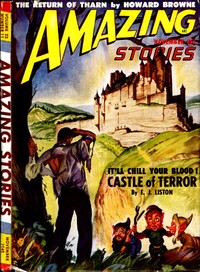
Phantom of the Forest — Story, Setting & Ideas
(6 User reviews)
1917
Project Gutenberg
2010
Not confirmed
Short stories; Supernatural -- Fiction; Hunting stories; Deer -- Fiction
Readers of public-domain and historical texts
Project Gutenberg digital edition
en
Edition facts
Words
8,565
Reading time
38 min
Text sections
1
The source record for Phantom of the Forest — Story, Setting & Ideas measures this digital text at 8,565 words, 38 min estimated reading time, and 1 detected text section.
The text analysis averages about 11.8 words per sentence, while the detected sections provide another way to judge how the source is divided.
Project Gutenberg metadata also associates the work with “Short stories,” connecting these edition facts with the source record’s subject description.
Source:
Project Gutenberg record #32891
In Leroy Yerxa's 'Phantom of the Forest,' a hunting party encounters a supernatural buck that retaliates against human violence. The story shifts between tense car travel, domestic interiors, and a snowy swamp, using recurring images of sleep, death, and weaponlessness to build dread.
Editorial Edition Score
4.4/5
★★★★★
★★★★★
Calculated from edition completeness, EPUB availability, text structure and catalogue metadata. Not a user rating.
How this score is calculated
- Description quality20 pts
- Title & short description10 pts
- Source metadata20 pts
- Text length15 pts
- Chapters / structure15 pts
- EPUB file integrity20 pts
Total of 100 points, scaled to a 2.5-5.0 range. Editions with an empty description or a missing EPUB file are not scored.
Edition quality
Read the Text
There were half a dozen guns stacked across their feet.
The snow came down thickly, endlessly. It drifted across the road. Almost eight inches had fallen since sundown. Tomorrow, there won't be any traffic moving, Robinson thought, not without a plow to break the trail. The valley will be a lost world.
"Shangrila," he said softly.
"Huh?" Roy Starr was almost asleep once more.
Robinson said, "Skip it."
He was thinking about the war, and the deep, lost valleys he flew into when he flew the "hump."
He tried to concentrate on the road once more. They had come six miles from Indian River. The road was just a white line, leading up and down long rows of dark evergreens. The snow filled the air, tangling his thoughts, filling the world with stinging, blinding particles of white. The snow actually seemed to hurt his eyes. It seemed to be hitting his eyeballs.
He shook his head angrily. _Sleep_ was stinging his eyes. He watched the trackless road with an intensity of a man hovering between life and death. Sleep--and death. Trying desperately to avoid both.
Taking a long chance, he pressed the gas pedal down as far as it would go. The motor roared, protested and the car leaped ahead like a monster alive. The speedometer said fifty--then fifty-five. Sixty. At sixty they hit the sharp incline. Roy Starr was wide awake now, holding tightly to the door-handle, as though it insured him against an accident. Someone stirred in the back seat.
"Almost there?" It was a girl's voice, sleepy and disinterested.
"Almost," Earl Robinson said, and twisted the wheel again. The car went crosswise with the road. It slid forward, up the hill, careened wildly and straightened its course once more. Robinson sighed.
"_Earl, for God's sake, stop!!_"
Roy Starr's voice welled out of him, filled with stark horror. Robinson saw the weird, shadowy form on the road just in time. He pressed hard on the brake and the car jerked into the ditch, and stopped with a sickening jolt.
The girl in the rear seat clawed her way forward, clutching Starr's shoulder.
"A man on the road," she cried. "Earl, you hit him."
She started sobbing as though her heart were breaking.
"Shut up," Robinson snapped. His nerves had reached the breaking point. Then, in a gentler voice. "There's a man there all right, Marge. I didn't hit him. Get hold of yourself. Glenn, Glenn, take care of her, will you?"
All three people in the rear seat were wide awake now. Glenn Starr, dark, serious, in full control of his wits, drew the sobbing girl back beside him.
"Take it easy, kid," he said. "Earl will take care of everything. We haven't done anything wrong."
The other man, sitting on the far side of the car, pushed the door open and climbed out.
"Man, this is a storm, and I don't mean perhaps. Nice little ditch we got ourselves into."
Robinson and Roy Starr got out. Roy pulled his collar up tightly around his neck. He walked back a few paces and kneeled beside the snow buried corpse. Earl Robinson, tall, solid, stood over him as he pushed away the snow.
"Nobody I know," Roy said, and turned away so he wouldn't have to stare at the dead, frozen face.
Robinson bent over and pushed more snow away.
The chest was badly crushed. Blood had frozen in the snow next to the wound.
"Hit sometime before the snow came," Robinson said.
Roy Starr was brushing snow away from the corpse.
"Maybe," he said softly. "A car never hit him, though. There aren't any blood tracks. The hole is in the direct center of his chest. The ribs aren't crushed on either side."
Robinson's voice was a little hushed.
"That's what I was thinking. Looks like a bear might have mauled him."
Roy Starr came slowly to his feet.
"Look," he said, "we aren't kidding ourselves. Something hit him, hard, in the chest. It wasn't a car because it didn't break in the whole bone structure. It wasn't a bear, because a bear would have done a more thorough job of it. Shooting is out. That isn't a bullet wound."
"The same thing that's been killing hunters for the past five years," Starr said grimly. "For lack of a better name, the phantom buck."
Robinson turned away, looking toward the car.
"You're crazy," he said. "Let's say we're both crazy. Our imaginations are running riot. I think the rest of the party ought to know about the _automobile accident_. We can't do any good here. We'll go on to Rosewood if we can get the buggy out of the ditch. We can call the sheriff from there. This is the sheriff's job, not ours."
The three people who had ridden in the rear seat were in the ditch, pushing snow away from the wheels. Glenn Starr was saying quietly:
"We ought to get him out of the road."
Robinson went to work with the shovel, digging the right rear wheel out of the snow and the thick, half-frozen mud.
"Forget all about it," he said. "No one will be driving through here tonight. We'll call the sheriff from Rosewood. Outside of that, it's none of our business. Automobile accident. Wasn't our fault. We've done all we can."
They worked hard, all of them trying to forget the body on the road and concentrate on the task of freeing the car from the ditch. In twenty minutes they were on their way, crawling slowly down the opposite side of the hill into the cup-like valley where a country store, church and schoolhouse had been flatteringly named "Village of Rosewood!"
Marjorie Wrenn was still crying softly. Glenn tried to comfort her, but the girl was exhausted mentally and physically. The snow still blotted out everything but a few yards of the road. Once in the valley, Robinson released his grip on the wheel and relaxed.
"Roy," he said softly.
"About that phantom buck story. I wouldn't talk too much. On the square, though I'm inclined to wonder."
Roy Starr's voice sank to a whisper.
"You think--maybe...?"
"Yea," Robinson answered, "I think--maybe...."
The electric light flashed on, making the world of swirling snow friendly once more. The car was parked beside the house, close to the barn. The place was a huge country store with the living quarters attached like a toad-stool to the side of it. There was a wood-pile in the yard, hidden under a foot of snow, looking like a crouching, white monster. A single pole had been buried in the ground, and from it hung a six-point buck. The deer had been gutted, and blood made little red blobs on the snow.
Glenn Starr climbed out and helped Marjorie Wrenn to the ground. He saw the overcoated figure emerging from the woodshed.
"Norm, you old horse. Got any snake bite medicine?"
Norm Boody, a well fed duplicate of Slim Summerville, was clad in a heavy overcoat drawn over a flannel night-shirt. His feet were hidden in vast, felt slippers.
"Thought you people weren't gonna get here. It's almost three in the morning. About those snake bites. What's the matter? Snow snakes biting tonight?"
The others were getting stiffly out of the car.
Earl Robinson said solemnly:
"Those snow snakes bite before you can go ten feet. We had a little trouble, Norm."
Boody found a half filled bottle in his coat and passed it around.
"Bad country to drive in a storm," he said.
"Worse than usual," Robinson said. "There is a dead man laying down the road a mile or two."
Norm Boody gulped from the bottle, choked and spewed the whiskey on the snow.
"It--wasn't Bill, was it?"
Robinson shook his head.
"No one I know. Dressed in hunter's outfit. Didn't find his gun. Probably buried under the snow."
Boody sighed. He looked uncertain.
"Bill went into Indian River for some stuff. He didn't come back."
"Look," Glenn said suddenly. "Marge is freezing and we're all tired out. We better get inside."
Norm Boody sprang toward the door and held it open.
"Sure, sure," he said. "The wife's got both coffee pots steaming by now. I oughta be shot for not getting this poor girl inside the minute she came. It ain't fit weather...."
"Let's get to that coffee."
Inside, they all greeted Mrs. Boody. While she poured coffee into the cups on the kitchen table, Robinson cornered Norm Boody and led him into the living room. It was a low-ceilinged, warm, homey place. A telephone hung on the far wall. Robinson dialed the sheriff's number at Indian River, put the receiver back in place, lifted it and tried again. He shook his head.
"Trouble?" Boody asked.
"The line must be down. Phone won't work. Guess we'll sleep tonight and make that call in the morning."
The two men sat down in the darkness of the living room. Mrs. Boody, a grey headed, smiling woman who looked as though she might be anyone's mother, came in with two steaming cups.
"You better drink before you freeze," she said. "That darned stove takes so long to heat up."
She turned to her husband.
"Norm, what's wrong?"
"Man dead down the road. Something mauled him. Killed before the snow came this evening. Earl most ran over him."
The room was deathly silent for a moment. Then the woman's voice came, almost in a sob.
"Norm, Norm, it wasn't Bill, was it?"
Robinson said quickly:
"It wasn't Bill. I saw the face. No one I've ever seen before."
"Thank God for that," Mrs. Boody said. "You called the sheriff?"
"Can't," Norm Boody said. "Line's out of order. We'll get in touch with town in the morning."
"I don't think we'll sleep much tonight," a soft voice said from the door.
Earl Robinson chuckled. It was an attempt to put the whole thing off lightly. It didn't sound very sincere.
"You'll sleep all right, Marjorie. After that trip, we'll all sleep."
The girl smiled wanly.
"I hope so. It's hard--thinking of that--that...."
Daylight brought a peaceful, untroubled look to the valley. For ten miles, without a track save for the animals who had moved during the night, the valley stretched upward on all sides to the wooded hills. The big general store, schoolhouse and country church nestled in the center of the snow cup, with trackless roads leading away to the four points of the compass.
Blue-gray smoke lifted straight upward from the house, drifted two hundred feet into the sky and wafted away into nothingness.
Robinson came out of the woodshed with his black and red plaid coat wrapped tightly around him. It was a grand hunting morning, and he didn't intend to let last night's incident spoil it. The country was beautiful but there was nothing gentle about it. You had to face violence and forget it--quickly. Death wasn't easy to look at, but here, people learned that when it came, there was no point in letting it interfere with their life.
Bill Boody hadn't come in last night. His car wasn't to be seen. Robinson went back into the woodshed. He climbed the steps to the kitchen and walked in quietly behind Mrs. Boody, who was bent over the kitchen stove.
"Where's Norm?" he asked.
Mrs. Boody looked worn and tired, as though she hadn't slept.
"Milking the cows. Bill didn't come home last night."
He knew that she was still suspicious of him. She wasn't sure that he told the truth about the body on the road.
"Bill will be okay," he said. "Are any of the others up?"
"Roy came out a few minutes ago. He took one look at the thermometer outside the kitchen window, groaned and went back to bed."
Robinson started for the bedroom.
"You better let Marge sleep," Mrs. Boody said. "She was all worn out. She needs the rest."
"Earl," the woman at the stove said. There was a quality of urgency in her voice that stopped him short. He pivoted.
"You think the phantom buck might have done the killing?"
Here it was again, he thought. They weren't satisfied to let the whole thing pass as an accident. They had to bring up dead dogs, fall back on superstition. Everything was perfect for hunting, and they had to spoil the spirit of the thing.
"That phantom buck business is a damned fairy tale," he said.
"_But you think it was the phantom buck, all the same._"
Robinson said nothing. The woman pushed the coffee pot back on the stove and went to the window. She stared out at the snowy world.
"Bill _saw_ the phantom buck once."
"I know," Robinson said. He wished she wouldn't talk about it. She was getting herself all excited. "Probably Bill had been drinking some of that snake bite medicine."
Mrs. Boody shook her head.
"Bill don't touch a drop." Her face was very red, maybe from the stove. "Bill said the buck was the biggest deer he'd ever seen. He went right by Bill, and disappeared, right in broad daylight. Bill looked for tracks after he was gone, and there weren't any."
She wet her lips and went back to the stove.
"I wouldn't worry, Mrs. Boody," Robinson said.
She looked up then with frantic eyes.
"_It isn't Bill, out there on the road, dead?_"
He went swiftly to her and put one hand on her shoulder.
"I wouldn't lie to you. It wasn't him."
She seemed to relax for the first time since last night.
"I guess you're telling the truth. I wish Bill would come home, though. They used to say that anyone who saw the phantom buck was getting ready for an early death."
Norm Boody came up from the barn with two steaming pails of milk. Roy Starr was getting dressed in the kitchen, close to the stove. He was muttering threats against his brother, Glenn.
"Never let a guy sleep," he groaned. "Always the first guy up and the only man on earth who can't let other people stay in bed when they want to."
Glenn Starr and Marjorie were already at the breakfast table. The others drifted in and sat down. A girl and a husky, sleepy-eyed man came down from upstairs. Roy Starr greeted the girl by chasing her around the stove and left her alone only after she picked up the poker and threatened to use it on him.
Robinson introduced the fifth member of the hunting party at the breakfast table.
"Pete Larson hasn't hunted before," he said. "Pete, you know our own bunch. You know Norm and Mrs. Boody now. The tall, fair damsel holding the coffee pot is Norma, Mrs. Boody's best assistant housekeeper and daughter. The sleepy eyed creature at her side is her husband, Floyd."
Larson himself was heavy set, and a slightly ponderous man who wore light rimmed glasses and a rather awed look on his face.
"I guess I've let myself in for some rugged country and some heavy eating," he said. "Anyhow, I always did like a fifth cup of coffee and the supply looks adequate."
"It _was_ rugged last night, all right," Roy Starr said.
Instantly there was silence. Norma, the tall, slim girl, looked at her mother questioningly.
Robinson broke in before she had time to speak.
"We found a dead man on the road last night. Nobody we knew."
He heard Norma and her husband catch their breaths quickly. Then the telephone rang and he was on his feet. Norm Boody was closer to the phone and answered it. The remainder of the group went on eating, but every ear was tuned to the conversation.
He listened for a time, then said:
"I got a party of hunters who came in last night. They saw him on the road. We tried to call you but the wires were dead."
"Oh? So that was it. Okay, we'll keep an eye open. Haven't seen Bill, have you? He's coming in behind the plough? Good. We were worried about him."
"Telephone linemen came through this morning," he explained. "They picked up the body. That was Sheriff Walt Beardsly calling. He ain't blaming you boys. Says your tracks went right around the body. Says a bear must have mauled the guy. They found his gun in the ditch."
"Yea, that's what happened all right. Bill's okay, isn't he?"
"Spent the night at the sheriff's house. Couldn't drive in. He's coming in a couple of hours."
Mrs. Boody went out for some more coffee. Larson, managing a smile, said:
"Guess we can go hunting without worrying about anything--except bear."
Norma tickled her husband between well padded ribs.
"Take Floyd along. He'll chase all the bears to the other side of the mountain."
"Guess you boys can take care of yourselves."
Roy Starr hadn't taken an active part in the conversation for some time. He brought his fist down on the table with a bang.
"To hell with the phantom," he stood up. "Ten minutes ago you were all tied up inside with a damned silly superstition. Now you're kidding yourselves that everything is okay. You're _still_ ready to believe in ghosts and goblins at a moment's notice. What's the matter? We all too scared to think clearly for ourselves?"
"Come on, Roy," he said. "Let's go out and get chains on the car. We'll need them to make that south hill."
Roy Starr was trembling. Something had slipped inside him. Something that made him angry at all of them. Who did they think he was? Could they handle him like a ten year old kid?
"You want to lead Junior outside and give him a lecture," he snapped. "Please don't scare these good people. Well, you can all go to hell. I'm going after a deer. If it turns out to be the phantom buck, I'll get _him_. I'm going alone and I don't need you or the car or anything else. I still got two good feet."
They sat there and watched him go. Robinson sat down a little weakly. They heard Roy pick up his rifle in the kitchen and waited until his footsteps faded beyond the woodshed.
"Well," Robinson said at last, "I guess Junior is on the warpath."
Glenn Starr looked at his watch. He halted in the protection of the evergreen grove and turned his back to the wind. Marjorie Wrenn caught up with him.
"Better rest," Glenn said. "It's after noon."
He found some sandwiches in his pocket and passed her one. The girl's face was very pale.
"The tracks didn't come out of the swamp," she said.
"Forget the tracks," Glenn said gently. "It's been snowing since ten o'clock. They were Roy's tracks all right. The snow drifted in and covered them up. He probably headed for home hours ago."
"I--can't eat, Glenn. Let's go back. Let's try to find the tracks again. I'm scared, Glenn. I'm so scared my teeth are chattering."
Glenn took her rifle.
"Follow me," he said abruptly. "You're all done in. I'll take the shortest route."
The girl took half a dozen faltering steps and sank down into the snow. When he reached her side, she was out cold. He rubbed her wrists and cheeks until her eyes, full of tears, opened slowly.
"You're gonna be all right," he said, and picked her up in his arms.
Slowly, for he knew it was going to be a rough trail, he headed across the valley toward home.
Earl Robinson moved more slowly now. He and Larson had swung down from the north and crossed the three sets of tracks. Larson, puffing from his first day of marching, came behind him. Robinson stopped finally. He waited for Larson to catch up. He pointed at the almost covered tracks.
"Here's where they missed his trail," he said. "I think we can still follow it if we take our time."
"Look," Larson said abruptly, "you don't believe that phantom buck business, do you?"
Robinson didn't answer. He started away through the swamp, watching for a broken twig here, an almost buried footprint there. It took him two long hours to find the end of the trail. It had started to snow again. The boy was half covered with the drift. A thick growth of cedars had protected him from the full force of the storm. His eyes were wide open and he showed signs of recognizing Robinson as the big man bent over him. He tried to smile, but he couldn't. There was blood around his lips and his jacket was torn open to reveal a deep, bloody gash in his chest.
Robinson built a fire hurriedly and Larson kept the blaze alive with dry logs.
Robinson swore softly as he found bandages in his kit and administered first aid. He swore at the cold, and the snow, and the thing that had done this to the kid.
The story opens with a car skidding on an icy road, its driver fighting sleep as snow fills the air. This initial scene establishes a pattern of movement between confined spaces—the automobile, a farmhouse kitchen, a bedroom—and the open, threatening forest. The snow is not mere backdrop but an active agent: it blinds, isolates, and transforms the valley into a 'lost world.'
Yerxa repeatedly links sleep with death, a motif that surfaces when Earl Robinson thinks 'Sleep—and death' while driving. Later, the wounded Roy Starr drifts in and out of consciousness, his breathing monitored by the others. The story’s structure alternates between these interior, human-controlled settings and the wild, where the phantom buck appears—a creature described as 'big—and grand, like sort of a God.'
Movement Between Confined and Open Spaces
The narrative moves through three distinct settings: the car, the farmhouse, and the swamp. Each space carries its own tension. In the car, characters are packed under equipment, half-asleep, vulnerable to the road and the weather. The farmhouse offers temporary safety, but conversations there revolve around the phantom, and the wounded Roy lies on a couch while others debate what happened. The swamp, where Earl Robinson goes weaponless, is where the supernatural threat becomes immediate.
This back-and-forth creates a rhythm of retreat and advance. The characters leave the car for the house, then leave the house for the woods. The final excerpt shows Robinson alone in the swamp, having deliberately abandoned his rifle. The transition from domestic light to forest cold is abrupt, emphasizing the shift from human order to wild uncertainty.
Recurring Images of Sleep, Death, and Weaponlessness
Sleep is a persistent image, often paired with death. Earl Robinson thinks 'Sleep—and death' while driving, and Roy Starr’s injury is described as a kind of sleep: 'He sank back, breathing hard' and later 'He’s going to sleep now.' The snow itself 'tangled his thoughts' and 'stung his eyes,' blurring the line between wakefulness and unconsciousness.
Weaponlessness is equally important. Robinson leaves his rifle in the car before entering the swamp. When he encounters the phantom, he makes 'it evident to anyone—anything, looking at him, that he carried no weapon.' This deliberate vulnerability contrasts with the earlier image of 'half a dozen guns stacked across their feet' in the car. The story seems to suggest that the phantom responds to aggression, not presence.
The Phantom as a Natural and Supernatural Force
The phantom buck is described in contradictory terms. Roy Starr says it had 'fire shooting out of his nostrils' and attacked him 'like lightning.' But Bill Boody, who saw it earlier, calls it 'big—and grand, like sort of a God.' The creature is both violent and majestic, a force of nature that punishes hunters.
The story’s opening line—'Every year men slaughter deer by the thousands; it seems only fitting that the tables be turned once in a while'—frames the phantom as a retaliatory entity. Yet the excerpts never confirm its true nature. Robinson’s decision to approach unarmed suggests a test or a ritual, but the outcome is not shown. The phantom remains an ambiguous presence, tied to the forest’s cold and silence.
Voice and Sensory Detail in the Excerpts
Yerxa’s prose relies on sensory details that ground the supernatural in the physical. The snow 'filled the air, tangling his thoughts, filling the world with stinging, blinding particles of white.' The car’s motor 'roared, protested and the car leaped ahead like a monster alive.' These descriptions give the environment a menacing agency.
Dialogue is terse and functional. Characters speak in short bursts: 'Almost there?' 'Skip it.' 'Close.' This economy contrasts with the longer, more lyrical passages describing the forest. The shift between clipped conversation and expansive description mirrors the story’s structural alternation between human spaces and the wild. The result is a narrative that feels both grounded and eerie, its horror emerging from the collision of ordinary travel with an inexplicable presence.
Readers should pay attention to how Yerxa uses the snow and the car as framing devices. The story begins and ends in motion, but the nature of that motion changes. The opening drive is a struggle against weather and fatigue; the final scene is a deliberate walk into danger. The phantom itself is never fully explained, and the excerpts leave its motives ambiguous. This restraint is the story’s strength, allowing the forest to remain a place of unresolved threat.
There’s a quiet dread that lingers in Yerxa’s snowy swamp, a sense that solitude itself watches. I think of Phantom of the Forest whenever I recall how property, too, can feel haunted, how a house holds its history like a breath. It reminds me of that old Andre Norton novel, Ralestone Luck — Key Ideas to Explore, which walks a similar shadowed path with an inheritance and its cost. Some stories simply whisper the same old truth.
-

Mitchell Pennington - 1 month ago
While 'Phantom of the Forest' has an enticing premise, the execution falls short. The story is bogged down by excessive descriptions of the forest, which, while beautiful, slow the narrative. The 'phantom' is underutilized, and the mystery loses intrigue as the plot unfolds with predictable twists. The characters lack depth, making their fates uninteresting. A tedious read that overpromises and underdelivers. -
Danny Rivas - 2 weeks ago
A solid mystery with a strong sense of place. The forest setting is vividly described, and the air of menace is well maintained. The main characters are interesting, though some secondary ones feel underdeveloped. The pacing is generally good, but the final reveal may feel a bit contrived to some. Still, it's a compelling read for those who enjoy nature-driven suspense. -
Cassandra Natalie Phillips - 1 week ago
Phantom of the Forest is a gripping tale that blends mystery, suspense, and supernatural elements against a lush forest backdrop. The atmosphere is beautifully built, making the forest itself a character. The plot is full of twists and kept me guessing until the end. The author's descriptive prose is immersive and evocative. I thoroughly enjoyed this thrilling ride and highly recommend it to fans of atmospheric mysteries.
Reader reflection
How will you remember this book?
Save your reaction, strongest insight, and memorable passage.
Your progress
0
/
10
2
What was your overall reaction to the book?
3
Would you pass this book on to a friend?
4
What was the reading difficulty like?
5
Did the book give you something worth debating?
6
Was the book easy to understand?
7
Did the book offer a fresh perspective?
8
How useful did the reading feel?
9
What changed or sharpened your thinking?
10







Samuel Wright
2 weeks ago