1


Across the Mesa — Key Ideas to Explore
(8 User reviews)
2409
Project Gutenberg
2008
Not confirmed
Americans -- Mexico -- Fiction; Young women -- Fiction; Love stories; Adventure stories
Readers of public-domain and historical texts
Project Gutenberg digital edition
en
Edition facts
Words
83,818
Reading time
365 min
Text sections
10
For Across the Mesa — Key Ideas to Explore, the stored edition analysis reports 83,818 words, 6 hr 5 min estimated reading time, and 10 detected text sections.
The text analysis averages about 13.5 words per sentence, while the detected sections provide another way to judge how the source is divided.
Project Gutenberg metadata also associates the work with “Americans -- Mexico -- Fiction,” connecting these edition facts with the source record’s subject description.
Source:
Project Gutenberg record #26984
In 1920s Chicago and Mexico, Polly Street chafes against family constraints and a broken engagement, then travels to her brother's coal mine in Athens, Mexico. The narrative contrasts urban dissatisfaction with desert landscapes, while exploring class, independence, and romantic tension through dialogue and setting.
Editorial Edition Score
4.8/5
★★★★★
★★★★★
Calculated from edition completeness, EPUB availability, text structure and catalogue metadata. Not a user rating.
How this score is calculated
- Description quality20 pts
- Title & short description10 pts
- Source metadata20 pts
- Text length15 pts
- Chapters / structure15 pts
- EPUB file integrity20 pts
Total of 100 points, scaled to a 2.5-5.0 range. Editions with an empty description or a missing EPUB file are not scored.
Edition quality
Read the Text
She was still smiling when she entered the building in which was located a club to which she belonged. It was a serious-minded club of clever women, and most people had been amused when Polly Street joined it. Nobody expected serious-minded things of Polly, though here and there someone was willing to admit that she was "clever enough in her way."
Finding the writing-room empty, Polly sat down to write a letter. Several times in her career she had decided upon courses of procedure which had seemed to her eminently practical, only to be talked out of them by her family. This time she would take no such chances. She would write to Bob, and Bob, being much like her, understood her--as well at any rate as any brother understands a sister. Then she would go over to the bank and get some money on her Liberty Bonds. Polly was as usual broke, Mr. Street being a man who provided credit liberally for his family but who had learned from experience that money was safer in his own hands.
A trip to the ticket office to make reservations and the thing would be done. A vague remembrance that Mexico was a place which demanded passports upon entrance came into her mind but was dismissed airily. Father would attend to that. The fact that Mexico was a troublous region where an American girl might meet with a good many disagreeable adventures was as airily dismissed. All that anyone needed to go anywhere, according to Polly's simple code, was common sense and money. The first she had, the second she intended to get, so why worry?
As she sat at the writing-table a slightly martial air came over Polly. Bob must be made to understand the situation. Because a man took it upon himself to dwell in or on a coal mine, Polly was never quite sure of the phrase, in the remote Southwest, he was not absolved from all family duties. The fact that he had married the handsomest girl in Arizona and was indulging in a honeymoon need not prevent an oppressed sister from demanding sympathy. She wrote rapidly.
"I know it's awfully nervy of me to drop in on you and Emma right at the beginning of your honeymoon, but I am coming just the same. Joyce Henderson has behaved atrociously to me. I'll explain when I see you. You needn't show this to Emma; you can read her scraps of it."
Polly paused. A mental picture of Emma, demure and pretty, came before her. Bob Street was a lucky man to have found a girl like Emma. A dreamy look succeeded the martial one. Visions of a flower-bedecked hacienda--was that what they called them, it didn't sound exactly right--surrounded by peons dozing in the sun succeeded the dimpled vision of Emma. Polly drew her ideas of Mexico entirely from the movies, Bob's short letters being quite lacking in atmosphere. She saw herself leaning over a balcony, listening to the strains of a mandolin, played by a tall, slim youth, who resembled a composite photograph of several of her favorite movie idols. Poor Joyce Henderson, how unimportant he seemed by the side of that radiant vision! Polly scribbled furiously.
In the northern part of Mexico, in the state of Sonora, lies the little mining town of Athens, ironically named by someone whose sense of beauty was offended by the yellow stretches of desert sand, broken by hills, dotted here and there by cactus and mesquite, and frowned upon by gaunt and angular mountains.
Athens, when the mining industry was running full time, was a busy if not a beautiful spot. Its row of shacks housed workers, male and a few female, to a generous number, while its busy little train of cars--for Athens owned a tiny spur of railroad connecting with the neighboring town of Conejo and operated for reasons germane to the coal industry--gave it, if you were very temperamental, something of the air of a metropolis seen through a diminishing glass.
The plant and offices which boasted two stories, and the general merchandise store which was long and rambling, were larger than the shacks; otherwise Athens was a true democracy. The company house in which the superintendent, the manager and the chief engineer "bached" only differed from the others by an added cleanliness, for Mrs. Van Zandt, the energetic woman who ran the boarding-house, gave an eye to its welfare. The little houses were arranged in one long street and that street was Athens.
Several days after the invasion of Athens suggested itself to Miss Polly Street in far-off Chicago, a prominent citizen strode from the offices in the direction of the boarding-house. He moved with decision, for he was hungry, and Mrs. Van Zandt was fastidious as to hours. The office force ate its supper at six, and the fact that Marc Scott was the assistant superintendent and, in the absence of the superintendent on affairs matrimonial, in charge altogether, was no reason in the eyes of Mrs. Van Zandt why he should be late to his meals.
Scott paused outside the boarding-house to look into the distance where an accustomed but always interesting sight met his eyes. Away in the distance, between two foothills, appeared the tiny thread of smoke which marked the approach of the little train from Conejo. It was fascinating to watch it; at first so indistinct, then plainer, and finally to see the little engine puffing its way along, dragging the small cars. There would be no one on it but the train gang and nothing more exciting than the mail, but its bi-weekly arrival never lost interest for Marc Scott.
"Johnson's late to-night," he muttered, and pushed open the door which led immediately to the dining-room. Three men had just begun eating. There was Henry Hard, the chief engineer; Jimmy Adams, the bookkeeper, and Jack Williams, who ran the company store; they, with young Street, Scott, the doctor--who a month ago had taken an ailing wife back to Cincinnati--and the train gang, formed the little group of Americans who had held the mining camp together.
While their location had been freer from trouble than many parts of Mexico, both in regard to bandit and federal persecution, they had borne a part in the general unrest. Once the town had been attacked by Indians; another time, lying in the path of one of Villa's hurried retreats, it had endured a week-end visit from that gentleman, after which horses and canned goods had been scarce for a while.
The worst trouble they had had, however, had been with labor. They worked the mine with Mexicans, and the Mexicans were an uncertain quantity. Athens was too far from the border to admit of hiring labor from the other side and allowing it to go back and forth, and the men they got were a discouraged lot, ready to abandon the job for anything that came up, from joining the newest bandit to enlisting in the army. Fighting seemed their _metier_ and most of them preferred it to the monotony of working a mine. A few who were married and had hungry families stayed longer than the rest but it was always a problem.
Just now the mine was running three days a week and no one knew when orders would come to shut down entirely. There were the usual rumors afloat in regard to the coming election in July and a good many people who had seen other elections in Mexico expected trouble. The Athens people were looking to Street's return for news from headquarters, but already several days had gone by since the wedding and they had heard nothing.
The men looked up and nodded as Scott entered and Mrs. Van Zandt, peering in from the kitchen through a square hole which served as a means of communication, brought him his coffee. Mrs. Van Zandt had a weak spot in her heart for Marc Scott--most women and children had. One did not at first see why. He was not good looking, except that he was well made and well kept; not particularly pleasing in his manner, being given to an abruptness of speech which most people found disconcerting; and he liked his own way more than is conducive to social harmony.
He was, however, straight as a die; was afraid of few things and no persons; and if he liked you, he had an especial manner for you which took the edge off his gruffness so that you wondered why you had ever thought him disagreeable. His hair and skin were as brown as each other, which was saying a good deal; his eyes were gray; his teeth white and strong; and he had the healthy look of a man who lives in the open, bathes a good deal and does not overeat.
"Late as usual," remarked Mrs. Van Zandt, pessimistically, as she set the coffee down beside him. "The less a man has to do in this world, the harder it seems to be for him to get to his meals on time."
"Ain't it the truth?" remarked Adams, with feeling. He was a short, chubby youngster, with a twinkling blue eye. "If it was me, I could whistle for my supper, but seeing it's him, he gets fed up, the beggar!"
"Too bad about you!" sniffed Mrs. Van Zandt. "I thought you'd cut out that second cup of coffee?"
"I'm aiming to cut it out during the heated term," was the cheerful reply. "There's something about your coffee, Mrs. Van, that's like some folks--refuses to be cut."
"Humph!" Mrs. Van was not inaccessible to flattery. "Dolores," this to a black-haired girl whose face appeared at the hole. "You can cut the pies like I told you--in fours. If that girl stays with me another month I'll make something out of her; but, Lord, why should I think she'll stay? They never do. Mexicans must be born with an itch for travel."
"I notice," suggested Hard, "that in the haunts of civilization they are cutting pies in sixes." Hard was a Bostonian--tall, spare, and muscular. He came of a fine old Massachusetts family, and his gray eyes, surrounded by a dozen kindly little wrinkles, his clean-cut mouth, wide but firm and thin lipped, showed marks of breeding absent in the other men.
"Hush, don't tell her!" growled Adams. "A woman just naturally can't help trying to follow the styles, and I can use more pie than a sixth, let me tell you."
Mrs. Van, having attended to the distribution of the pie, sat down at the foot of the table for a bit of conversation. She was a good-looking woman with dark hair and eyes, and features which, though they were hard, were not disagreeable. Her figure was restrained with much care from its inclination to over fleshiness. Mrs. Van scorned the sort of woman who let herself get fat and fought the enemy daily. I could not possibly tell you her age, for no one but herself knew it. It might be thirty-five and on the other hand it might easily be ten or fifteen years more.
She had led a roving life, beginning somewhere in the Middle West, carrying on for a time in the East, where it involved a bit of stage life to which she loved to refer. There had been a short spasm of matrimony, not entirely satisfactory, the late Van Zandt having had his full share of his sex's weaknesses, and a final career of keeping a boarding-house in New York. After that she had drifted West and finally into Mexico. She had been a veritable godsend to the Athens mining company which had undergone the agonies of native cooking until the digestions of the American portion of the working force were in a condition resembling half extinct craters.
"What I'm wonderin' is if Bob Street and his girl got married or not and when they're coming home," she remarked as she sat down. One of Mrs. Van's little peculiarities, saved probably from the wreck of her theatrical career, was a tendency toward calling people by their first names when they were not there to protect themselves and sometimes even when they were.
"If they've got any sense at all they'll wait," said Scott, placidly. "This is no time to be bringin' more women into the country."
"That's so," agreed Williams, a confirmed bachelor. "It was good luck the Doc took his wife and kids off when he did. There'll be trouble here when them elections is held."
"Pick up your skirts and run, Mrs. Van!" suggested Adams. "You may be cooking for a Mexicano yet."
"If I do he'll know it," was the prompt reply. "I ain't the runnin' kind. Anybody who's staved off the landlord in New York as many times as I have ain't going to worry about Mexicans. What I think those young folks ought to do is to go East for their honeymoon."
"They can't," replied Adams, with a grin. "It wouldn't look sporting for the Supe to leave his underlings without protection in such a crisis."
"I like Bob Street as well as any young chap I know," said Mrs. Van Zandt, meditatively, "but I don't know as I'd want him standin' between me and Angel Gonzales--if Angel was much mad." Angel Gonzales was a local bandit; a man of many crimes and much history. "But, of course, it wouldn't look well for the Sup'rintendent to run away."
"Street's not the running kind, either; don't fool yourself about that," remarked Scott, quietly.
"He's a good kid. I don't care if he is a rich man's son," said Adams with sincerity. "If my Dad had money I wouldn't be keeping books, you bet."
"No, son, you'd be playing the ponies up at Juarez," responded Hard, cheerfully.
"Not ponies, Henry dear, roulette," replied Jimmy, pleasantly. "Me and Mrs. Van are going to get spliced just as soon as the Ouija board tells her the winning system."
"It's all very well for you to make fun of things you don't know any more about than a baby, Jim Adams." Mrs. Van's scorn was intense. "If you'd read that article I showed you in the magazine about the man that talked to his mother-in-law by the Ouija----"
"Mother-in-law? Great guns, is that the best the thing can do?"
The reply was cut short by the entrance of the train gang, hot and hungry, clamoring for food.
"Sand-storm. Windy as a parson. Say, you fellows eat up all the pie?" Conversation was suspended while the demands of hunger were satisfied, and Scott distributed the mail which the late comers had brought.
"From Bob?" Hard looked up from his Boston paper as Scott grunted over his letter. Scott nodded and then as the others looked their curiosity, he read the brief note aloud.
"Have just had a summons from the directors to go East at once; guess they're uneasy about something they've heard and want first-hand information. Emma and I are starting for Chicago to-morrow. Open all mail and wire anything important.
"Just what I said they'd ought to do," breathed Mrs. Van, happily. "Well, that girl's got a good husband--I'll say she has."
"Directors would be a heap more uneasy if they knew what we know," remarked Williams, sententiously. "Hear anything more about the Chihuahua troops bein' ordered in, Johnson?"
"Nope," replied the engineer, his mouth full of pie. "Everybody crawled into their holes in Conejo. Didn't you never see a sand-storm, Jack?"
"I wish I'd known he was going to Chicago. I'd have asked him to look in on my girl," said Jimmy, folding up his letter. "I don't like the way she writes--all jazz and picture shows. Some cuss is trying to cut me out with her."
"More likely she's heard about you and the little Mexican over to Conejo," remarked the fireman, unsympathetically.
"If you'd had her address she sure would have," replied Adams, promptly. "That Mexican girl----"
"Yes, we remember her. She was a looker but she used too much powder--they all do." Hard's voice was judicial. "She always reminded me of a chocolate cake caught out in a snow-storm."
"Hush up!" Mrs. Van's voice was tragic. "Do you want Dolores to get mad and quit? They've got their feelings same as we have. I guess I've got to catch a deaf and dumb one if I want to keep her on this place!"
Marc Scott sat in his place, a pile of letters before him, when the others had gone, and Mrs. Van was helping Dolores with the dishes.
"Say, Mrs. Van, when you get through with those dishes come outside a minute; I want to talk to you," he said as he threw open the door.
The shack boasted no veranda, but there were three small steps. Scott seated himself on the top one and rolled a cigarette. The air was chilly. The sun had sunk behind the mountains and outlined their rugged shapes with golden lines against the purple. Everything was very still--there was not a sound except for the faint strains of the victrola, which Jimmy Adams always played for an hour after supper. A few figures moved about in and out of the other cabins; not many--for the working force was light these days. A light in the store showed that Williams was keeping open house as usual.
The door opened and Mrs. Van came out and sat beside him on the step.
"Well?" she said, quietly, "what's the matter?"
"I'm in the deuce of a mess," replied Scott.
"Worse than that--it's a woman, Mrs. Van."
"A woman!" Mrs. Van was plainly shocked. "My land, Marc Scott, you ain't been foolin' with that heathen in the kitchen?"
Scott chuckled. "Listen, Mrs. Van, I oughtn't to string you like that--it is a woman, though. You heard me read that letter of Bob's?"
"He said to read the mail."
"Yes, and the first one I tumbled into feet foremost was a confidential one from his sister. She says she's coming down here. She thinks he's here."
"What? You mean here? Athens?"
"That's what she says. The letter's been lying over at Conejo since Tuesday and the chances are she's there by this time."
"Oh, that ain't the worst. It was a confidential letter. She said----" Scott paused in embarrassment.
"I'm not telling you this for fun, Mrs. Van Zandt, but because I don't know what to do. You're a lady----"
"Oh, go on, what's the matter with you? I guess if you know it it ain't going to hurt me. Has she run off with somebody, or has her Pa lost his money, or what?"
"I'll show you." Scott fished out Polly's letter apologetically. "I stopped reading it directly I saw it was confidential," he continued, "but I got this much at one swallow."
"I know it's awfully nervy of me to drop in on you and Emma right at the beginning of your honeymoon, but I am coming just the same. Joyce Henderson has behaved atrociously to me."
"That's all I read," concluded Scott, penitently. "Joyce Henderson is the fellow she's engaged to--Bob told me that. I had to look at the end to see if she said when she was coming, and by George, if she started when she said she was going to, she ought to be in Conejo right now."
"What we're going to do with her, I don't know, do you?"
"She and the wedding couple have just crossed each other!"
"Looks like it. Look here, Mrs. Van, what am I going to do? If I don't look her up, God knows what'll happen to her over in Conejo, unless she has sense enough to go to the Morgans. If I do, she's going to raise merry heck because I read that letter about the fellow jilting her. Now I thought maybe if you'd let on that you read it--a girl wouldn't mind another woman's knowing a thing like that as much as she would a man."
Mrs. Van Zandt surveyed Scott pityingly.
"It always seems so queer to me that a man can have so much muscle and so little horse sense," she said at length.
"There ain't any use my explaining; you wouldn't get me," she went on, impatiently. "But here's something even you can understand. I'd look nice opening the boss's mail, wouldn't I? Now you've read the worst of it you might as well dip into it far enough to find out just when she's coming. Somebody'll have to drive over to Conejo for her as long as the machine's busted."
"I've read all I'm going to," said Scott, doggedly. "You can do the finding out."
Mrs. Van Zandt grunted, arranged a pair of eyeglasses which sat uneasily on a nose ill adapted to them, and glanced at the letter. She gave a sigh of relief.
The novel opens with Polly Street driving her electric car down Michigan Boulevard, resentful of her family's restrictions and her broken engagement to Joyce Henderson. The early chapters establish a vivid sense of place—Chicago's cold spring, then the Arizona desert and the Mexican mining town of Athens—while introducing a cast of characters including her brother Bob, the enigmatic Hard, and the singer Mrs. Conrad. The excerpts reveal a narrative voice that balances social observation with romantic tension, often using dialogue to expose characters' assumptions about class and gender.
Urban Discontent and the Pull of the Desert
The opening chapter establishes Polly's frustration with her circumstances: she hates driving the electric car, her brother Bob is marrying in Arizona, and her engagement has ended. The narrative dwells on her sense of confinement—'bitterness in her heart'—and her desire for a gas car or a chauffeur. This urban discontent is immediately contrasted with the desert setting when Polly travels to Mexico. The excerpts show the author using landscape to signal emotional shifts: the 'hilly country' and 'mountains, irregular, dark, and mysterious' under moonlight prompt Polly to reflect on Mrs. Conrad's life. The desert is not just a backdrop but a catalyst for introspection and romantic possibility.
Dialogue as a Window into Character
The excerpts rely heavily on conversation to reveal character and advance the plot. Polly and Scott's exchange on the porch is a key example: Scott teases Polly about her assumptions, calling her 'a good deal of a kid,' while Polly defends herself with self-deprecating humor. Their banter touches on luck, superstition, and life experience—'I've noticed that people who are always expecting bad luck usually get it.' The dialogue also conveys backstory, as when Scott recounts Mrs. Conrad's history: her failed romance with Hard, her marriage to an Englishman, and her husband's death. These conversations feel natural and unforced, giving the reader insight into social dynamics and past events without heavy exposition.
Themes of Independence and Social Expectation
Polly's character is defined by her struggle against the roles assigned to her. She is a 'daring horsewoman, a crack swimmer and a golf champion,' yet she is denied a gas car and must drive an electric. Her broken engagement is a public embarrassment, and she resents being treated as naive. The excerpts suggest a tension between her desire for autonomy and the constraints of her social class. Scott's comment about her being 'brought up... having everything easy' stings because it implies she lacks resilience. Meanwhile, Mrs. Conrad's story—choosing a career over marriage, then marrying later—offers an alternative model. The novel seems to explore whether Polly can forge her own path in a world that expects her to marry and conform.
Readers should pay attention to how the author uses setting to mirror internal states, and how dialogue carries both plot and theme. The excerpts offer a strong sense of Polly's voice—wry, self-aware, and restless—but the full novel may develop her relationships and choices further. The catalog subjects (Americans in Mexico, young women, love, adventure) are all present in the excerpts, but the story's texture comes from its specific details: the electric car, the moonlit desert, the mining town of Athens.
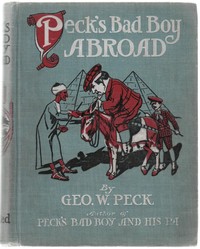
There’s something about Polly’s restless Chicago days that reminded me of another wandering soul—one who never quite fits where he’s planted. The desert stretches between them somehow, that quiet ache of wanting somewhere else. I kept thinking of Peck's bad boy abroad — Story, Setting & Ideas while reading, that same tug between home and horizon, never fully settled.
Luke Rivera
3 weeks agoAvery Walker
3 weeks agoElla Walker
1 month agoLeo Scott
3 weeks ago-

Natalie Stewart - 1 month ago
{'review_type': 'negative', 'content': "Across The Mesa is a tired rehash of classic Western tropes. The characters are cardboard cutouts - the hero is too perfect, the villain is pure evil. The plot is predictable and lacks nuance. The prose is workmanlike but uninspired. If you've read one Western, you've read this. It offers nothing new or exciting."} -
David Hunt - 1 month ago
{'review_type': 'neutral', 'content': "Across The Mesa provides a solid Western narrative with exciting shootouts and a strong sense of place. However, the pacing is uneven, with long stretches of description that slow the story. The antagonist is underdeveloped, appearing as a generic villain. Still, it's an enjoyable read for fans of the genre, offering plenty of action."} -
David Williams - 3 weeks ago
{'review_type': 'positive', 'content': 'Across The Mesa is an exhilarating Western adventure with vivid descriptions. The action is thrilling, and the landscape becomes a character in itself. The protagonist is rugged yet humane, and the conflict is gripping. The author captures the spirit of the frontier with authenticity. This is a compelling read that will transport you to another time. I loved every page.'}
Reader reflection
Take a moment to reflect on this book
Create a short personal record of your experience with this book.
Your progress
0
/
10
2
What was your overall reaction to the book?
3
How likely are you to recommend this book?
4
How demanding did the text feel?
5
Was the book what you thought it would be?
6
Which part made the strongest impression?
7
Did any part of the book feel personally relevant?
8
Could you apply anything you learned?
9
What did this book teach you most?
10








Gabriel Garcia
3 weeks ago