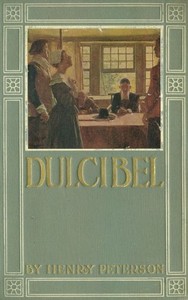
The Witch of Salem; or, Credulity Run Mad — Reading Companion
Edition facts
The source record for The Witch of Salem; or, Credulity Run Mad — Reading Companion measures this digital text at 84,162 words, 6 hr 6 min estimated reading time, and 12 detected text sections.
The text analysis averages about 16.9 words per sentence, while the detected sections provide another way to judge how the source is divided.
Project Gutenberg metadata also associates the work with “Historical fiction,” connecting these edition facts with the source record’s subject description.
Calculated from edition completeness, EPUB availability, text structure and catalogue metadata. Not a user rating.
How this score is calculated
- Description quality20 pts
- Title & short description10 pts
- Source metadata20 pts
- Text length15 pts
- Chapters / structure15 pts
- EPUB file integrity20 pts
Total of 100 points, scaled to a 2.5-5.0 range. Editions with an empty description or a missing EPUB file are not scored.
Read the Text
CHAPTER I. THE MAN WITH THE BOOK, 1
CHAPTER II. PENNSYLVANIA, 23
CHAPTER III. THE INDENTED SLAVE, 43
CHAPTER IV. MR. PARRIS AND FLOCK, 65
CHAPTER V. A NIGHT WITH WITCHES, 81
CHAPTER VI. THE CHARTER OAK, 101
CHAPTER VII. TWO MEN WHO LOOK ALIKE, 116
CHAPTER VIII. MOVING ONWARD, 134
CHAPTER IX. CHARLES AND CORA, 152
CHAPTER X. CHARLES AND MR. PARRIS, 172
CHAPTER XI. ADELPHA LEISLER, 191
CHAPTER XII. LEISLER'S FATE, 216
CHAPTER XIII. CREDULITY RUN MAD, 234
CHAPTER XIV. THE FATE OF GOODY NURSE, 256
CHAPTER XV. "YOUR MOTHER A WITCH!" 276
CHAPTER XVI. ESCAPE AND FLIGHT, 290
CHAPTER XVII. OUT OF THE FRYING PAN INTO THE FIRE, 306
CHAPTER XVIII. SUPERSTITION REIGNS, 327
CHAPTER XIX. THE WOMAN IN BLACK, 346
CHAPTER XX. CONCLUSION, 364
HISTORICAL INDEX, 383
LIST OF ILLUSTRATIONS.
William Penn making his treaty of peace and friendship with the Indians (See page 32), _Frontispiece_
"Cannot rise! Prythee, what ails you, friend?" 11
Seizing a firebrand, he searched for the print of the cloven foot, 21
"We all rose in the air on broomsticks," 95
Charles Stevens, at one sweep, snuffed out every candle on the table, 108
The sturdy wife assailed him with her mop-stick and drove him away, 147
"Then you may both go down--down to the infernal regions together!" 189
"Which of the twain shall it be?" 213
Eight men, bearing litters, were at the door. All were dripping with water, 233
At every stroke he repeated, "I do this in the name of the Lord," 239
"Its motions were quicker than those of my axe," 250
The sheriff brought the witch up the broad aisle, her chains clanking as she stepped, 274
The jail trembled to its very centre, 301
Nought was to be seen, save massacre and pillage on every side, 310
The resolute father continued to fire as he retreated, 320
Lieut.-Gov. Stoughton, 330
George Waters cut two stout sticks for crutches, 353
"Charles Stevens, do you seek death?" 371
Map of the period, 306
THE MAN WITH THE BOOK.
Through shades and solitudes profound, The fainting traveler wends his way; Bewildering meteors glare around, And tempt his wandering feet astray. --Montgomery.
The autumnal evening was cool, dark and gusty. Storm-clouds were gathering thickly overhead, and the ground beneath was covered with rustling leaves, which, blighted by the early frosts, lay helpless and dead at the roadside, or were made the sport of the wind. A solitary horseman was slowly plodding along the road but a few miles from the village of Salem. In truth he was so near to the famous Puritan village, that, through the hills and intervening tree-tops, he could have seen the spires of the churches had he raised his melancholy eyes from the ground. The rider was not a youth, nor had he reached middle age. His face was handsome, though distorted with agony. Occasionally he pressed his hand to his side as if in pain; but maugre pain, weariness, or anguish, he pressed on, admonished by the lengthening shadows of the approach of night. Turning his great, sad, brown eyes at last to where the road wound about the valley across which the distant spires of Salem could be seen, he sighed:
"Can I reach it to-night? I must!"
Salem, that strange village to which the horseman was wending his way, in October, 1684, was a different village from the Salem of to-day. It is a town familiar to every American student, and, having derived its fame more from its historic recollections than from its commerce or industries, its name carries us back two centuries, suggesting the faint and transient image of the life of the Pilgrim Fathers, who gave that sacred name to the place of their chosen habitation. Whatever changes civilization or time may bring about, the features of natural scenery are, for the most part, unalterable. Massachusetts Bay is as it was when the Pilgrim Fathers first beheld it. On land, there are still the craggy hills, with jutting promontories of granite, where the barberries grow, and room is found in the narrow valleys for small farms, and for apple trees, and little slopes of grass, and patches of tillage where all else looks barren.
The scenery is not more picturesque to-day, than on that chill autumnal eve, when the strange horseman was urging his jaded steed along the path which led to the village. His garments were travel-stained and his features haggard.
Three hunters with guns on their shoulders were not half a mile in advance of the horseman. They, too, evidently had passed a day of arduous toil; for climbing New England hills in search of the wild deer was no easy task.
They were men who had hardly reached middle age; but their grave Puritanic demeanor made them look older than they were. Their conversation was grave, gloomy and mysterious. There was little light or frivolous about them, for to them life was sombre. The hunt was not sport, but arduous toil, and their legs were so weary they could scarcely drag themselves along.
"Now we may rejoice, John Bly, that home is within sight, for truly I am tired, and I think I could not go much farther," one of the pedestrians remarked to the man at his side.
"Right glad will I be when we are near!" answered the fatigued John Bly. "This has been a hard day with fruitless result."
"We have had some fair shots to-day," put in a third man, who walked a little behind the others.
"Verily, we have; yet what profits it to us, Samuel Gray, when our guns fail to carry the ball to the place? I had as many fair shots to-day as would bring down a dozen bucks, and yet I missed every time. You know full well I am not one to miss."
"You are not, John Louder."
Then the three men looked mysteriously at each other. They were all believers in supernatural agencies, and the fact that such a faultless marksman should miss was enough to establish in their minds a belief that other than natural causes were at work. There could be no other reason given that John Louder should miss his mark, than that his gun was "bewitched." It was an age when the last dying throes of superstition seemed fastening on the people's minds, and the spasmodic struggle threatened to upset their reason. The New Englander's mind was prepared for mysteries as the fallow ground is prepared for the seed. He was busied conquering the rugged earth and making it yield to his husbandry. His time was divided between arduous toil for bread and fighting the Indians. He was hemmed in by a gloomy old forest, the magnitude of which he did not dream, and it was only natural, with his fertile imagination, narrow perceptions and limited knowledge, that he would see strange sights and hear strange sounds. Images and visions which have been portrayed in tales of romance and given interest to the pages of poetry were made by him to throng the woods, flit through the air and hover over the heads of terrified officials, whose learning should have placed them beyond the bounds of superstition. The ghosts of murdered wives, husbands and children played their part with a vividness of representation and artistic skill of expression hardly surpassed in scenic representation on the stage. The superstition of the Middle Ages was embodied in real action, with all its extravagant absurdities and monstrosities. This, carried into the courts of law, where the relations of society and conduct or feelings of individuals were suffered to be under control of fanciful or mystical notions, could have but one effect. When a whole people abandoned the solid ground of common sense, overleaped the boundaries of human knowledge, gave itself up to wild reveries, and let loose its passions without restraint, the result was more destructive to society than a Vesuvius to Pompeii. When John Louder said his gun was bewitched, there was no incredulous smile on his companions' faces.
The political complexion of New England at that time no doubt had much to do with the superstitious awe which overspread that country. Within the recollection of many inhabitants, the parent government had changed three times. Charles II. had lived such a life of furious dissipation, that his earthly career was drawing to a close.
The New England people were zealous theologians, and Massachusetts and Plymouth hated above all sects the Roman Catholics. Charles II. could not reign long, and James, Duke of York, his brother, would be his successor, as it was generally known that Charles II. had no legitimate heir. It was hoped by some that his illegitimate son, the Duke of Monmouth, a Protestant, might succeed him. Some had even hinted that Charles II., while flying from Cromwell, had secretly married Lucy Waters, the mother of the duke; but this has never been proved in history.
The somewhat ostentatious manner in which the Duke of York had been accustomed to go to mass, during the life of his brother, was the chief cause of the general dislike in which he was held. Even Charles, giddy and careless as he was in general, saw the imprudence of James' conduct, and significantly told him on one occasion that _he_ had no desire to go upon his travels again, whatever James might wish. When it became currently reported all over the American colonies that this bigoted Catholic would, on the death of his brother, become their ruler, the New Englanders began to tremble for their religion. There was murmuring from every village and plantation, keeping society in a constant ferment.
The three hunters were still discussing their ill luck when the sound of horse's hoofs fell on their ears, and they turned slowly about to see a stranger approaching them on horseback. His sad, gray eye had something wild and supernatural about it. His costume had at one time been elegant, but was now stained with dust and travel. It included a wrought flowing neckcloth, a sash covered with a silver-laced red cloth coat, a satin waistcoat embroidered with gold, a trooping scarf and a silver hat-band. His trousers, which were met above the knees by a pair of riding boots, like the remainder of his attire, was covered with dust.
The expression of pain on his face was misconstrued by the superstitious hunters into a look of fiendish triumph, and John Louder, seizing the arm of Bly, whispered:
"I know it, Bly, for he hath followed me all day."
"Then wherefore not give him the ball, which he hath guarded from the deer?"
"It would be of no avail, John. A witch cannot be killed with lead. He would throw the ball in my face and laugh at me."
The three walked hastily along, casting wary and uneasy glances behind as the horseman drew nearer. Each trembled lest the horseman should speak, and once or twice he seemed as if he would; but pain, or some other cause unknown to the hunters, prevented his doing so. He rode swiftly by, disappearing over the hill in the direction of Salem.
When he was out of sight the three hunters paused, and, falling on their knees, each uttered a short prayer for deliverance from Satan. As they rose, John Louder said:
"Now I know full well, good men, that he is the wizard who hath tampered with my gun."
"Ah! well may you ask, Samuel Gray, who he is; a stranger, the black man, the devil, who hath assumed this form to mislead and torment us. One can only wonder at the various cunning of Satan," and Louder sighed.
"Truly you speak, friend John," Bly answered. "The enemy of men's souls is constantly on the lookout for the unwary."
"I have met him and wrestled with him, until I was almost overcome; but, having on the whole armor of God, I did cry out 'Get thee behind me, Satan!' and, behold, I could smell the sulphur of hell, as the gates were opened to admit the prince of darkness."
The shades of night were creeping over the earth, and the three weary hunters were not yet within sight of their homes, when the horseman who had so strangely excited their fears drew rein at a spring not a fourth of a mile from the village of Salem and allowed his horse to drink. He pressed his hand to his side, as if suffering intolerable anguish, and murmured:
"Will I find shelter there?"
Overcome by suffering, he at last slipped from his saddle and, sitting among the rustling leaves heedless of the lowering clouds and threatened storm, buried his face in his hands. Two hours had certainly elapsed since he first came in sight of Salem, and yet so slow had been his pace, that he had not reached the village; but on the earth, threatened with a raging tempest, he breathed in feeble accents a prayer to God for strength to perform the great and holy task on which he was bent. He was sick and feeble. In his side was a wound that might prove fatal, and to this he occasionally pressed his hand as if in pain.
He who heareth the poor when they cry unto Him, answered the prayer of the desolate. A farmer boy came along whistling merrily despite the approaching night and storm. Not the chilling blasts of October, the dread of darkness, nor the cold world could depress the spirits of Charles Stevens, the merry lad of Salem. In fact, he was so merry that, by the straight-laced Puritans, he was thought ungodly. He had a predisposition to whistling and singing, and was of "a light and frivolous carriage." He laughed at the sanctity of some people, and was known to smile even on the Lord's Day. When, in the exuberance of his spirits, his feet kept time to his whistling, the good Salemites were horrified by the ungodly dance.
Charles Stevens, however, had a better heart, and was a truer Christian than many of those sanctimonious critics, who sought to restrain the joy and gladness with which God filled his soul. It was this good Samaritan who came upon the suffering stranger whom the three Puritans had condemned in their own minds as an emissary of the devil.
"Why do you sit here, sir?" Charles asked, leaving off his whistle. "Night is coming on, and it is growing so chill and cold, you must keep moving, or surely you will perish."
"I cannot rise," was the answer.
"Cannot rise! prythee, what ails you, friend?"
"I am sick, sore and wounded."
"Wounded!" cried Charles, "and sick, too!"
His sharp young eyes were enabled to penetrate the deepening shades of twilight, and he saw a ghastly pallor overspreading the man's face, who, pressing his hand upon his side, gave vent to gasps of keen agony. His left side was stained with blood.
"You are wounded!" Charles Stevens at last declared. "Pray, how came it about?"
"I was fired upon by an unseen foe, for what cause I know not, as, being a stranger in these parts, I have had no quarrel."
"Come, let me help you to rise."
"No, it is useless. I am tired and too faint to go further. Let me lie here. I will soon be dead, and all this agony will be over."
At this, the cheerful mind of Charles Stevens asserted itself by inspiring hope in the heart of the fainting stranger.
"No, no, my friend, never give up. Don't say die, so long as you live. It is but a few rods further to the home where I live with my mother. I can help you walk so far, and there you can get rested and warmed, and mother will dress your wound."
"Can I go?" the traveller asked.
"Men can do wonders when they try."
The boy threw his strong arm around the man and raised him to his feet; but his limbs no longer obeyed his will, and he sank again upon the ground.
"It is of no avail, my good boy. I cannot go. Leave me to die."
Charles turned his eyes about to look for the stranger's horse; but it had strayed off in the darkness. To search for him would be useless, and for a moment the good Samaritan stood as if in thought; then, stripping off his coat and wrapping it around the wounded man, he said hopefully:
"I will be back soon, don't move," and he hurried away swiftly toward home. On reaching the threshold, he thanked God that he was not a wanderer on such a night.
The New England kitchen, with its pewter-filled dresser, reflecting and multiplying the genial blaze of the log-heaped fire-place, its high-backed, rush-bottomed chairs, grating as they were moved over the neatly sanded floor, its massive beam running midway of the ceiling across the room, and its many doors, leading to other rooms and attics, was a picture of comfort two hundred years ago. The widowed mother, with her honest, beautiful face surrounded by a neat, dark cap border, met her son as he entered the kitchen and, glancing at him proudly, said:
"The wind gives you good color, Charles."
"Yes, mother," rubbing his cheeks, "they do burn some;--mother."
"I heard you tell Mr. Bly, the other day, that you could trust me with all you had. Will you trust me with old Moll and the cart to-night?"
"What do you want with Moll and the cart?"
"To go to the big spring under the hill for a poor man who is sick and wounded."
"It is a freezing night."
"Yes, mother, and he may die. He is unable to walk. Remember the story of the good Samaritan."
After a long pause, the widow said, "Yes, you may have old Moll and the cart. Bring him here, and we will care for him; but remember that to-morrow's work must be done."
"If you have any fault to find to-morrow night, don't trust me again!" and the boy, turning to the cupboard beneath the dressers, buttered a generous slice of bread, then left the room with a small pitcher, and returned with it brimming full of cider, his mother closely noting all, while she busied herself making things to rights in her culinary department. Charles next went out and harnessed the mare to the cart, then returned to the kitchen for his bread and cider.
"Why not eat that before you go?" queried the mother.
"I am not hungry, I have had some supper, you know. Good night, mother. I will be back soon; so have the bed ready for the wounded stranger."
"God bless you, my brave boy," the mother exclaimed, as he went out and sprang into the cart. She now knew that he had taken the bread and cider for the sick man, under the hill.
Charles hurried old Moll to a faster gait than she was accustomed to go, and found the stranger where he had left him. Leaping from the cart, he said:
"I am back, sir! You said you were faint. Here's some of our cider, and if you will sit up and drink it and eat this bread, you will feel better, and here is old Moll and the cart ready to take you home where you will receive good Christian treatment until you are well enough to go on your way rejoicing."
So he went on, bobbing now here and now there and talking as fast as he could, so as not to hear the poor man's outpourings of gratitude, as he ate and drank and was refreshed. With some difficulty, he got the stranger into the cart, where, supported by the boy's strong arm, he rode in almost total silence through the increasing darkness to the home of the widow Stevens. He was taken from the cart and was soon reclining upon a bed.
His wound, though painful, was not dangerous and began to heal almost immediately. Surgery was in its infancy in America, and on the frontier of the American colonies, every one was his own surgeon.
The widow dressed the wound herself, and the stranger recovered rapidly. Charles next day found a horse straying in the forest with a saddle and holsters, and, knowing it to be the steed of the wounded stranger, he brought it home.
As the wounded man recovered he became more silent and melancholy. He had not even spoken his name and seldom uttered a word unless addressed.
One night this mysterious stranger disappeared from the widow's cottage. He might have been thought ungrateful had he not left behind five golden guineas, which, the note left behind said, were in part to remunerate the good people who had watched over and cared for him so kindly. Charles Stevens and his mother were much puzzled at this mysterious stranger, and often when alone they commented on his conduct.
John R. Musick's preface to The Witch of Salem; or, Credulity Run Mad (1893) directly addresses the challenge of rendering historical speech, warning that critics often penalize the author who 'approaches the truth' by preserving dialect and idioms. This defensive posture signals that the novel's language is a deliberate, research-backed feature, not a casual choice. The excerpts show a marked contrast between formal, philosophical dialogue—such as Charles Stevens's reflections on 'man's estate'—and the jealous, clipped fury of Sarah Williams, whose 'teeth gnashed until they threatened to crack' conveys menace through physical detail rather than ornate syntax.
Dialect as a Marker of Character and Period
Musick's preface insists that 'the speeches of his characters' are clothed in 'the dialect and idioms peculiar to the age,' a claim the excerpts bear out unevenly. Charles and Adelpha trade polished, almost stilted lines—'Your words, Adelpha, teach me how foolish and idle was my remark'—that echo eighteenth-century courtesy literature. In contrast, Sarah Williams's interior monologue is terse and visceral: 'He hath another! Which of the two doth he love most? I will know, and then—woe betide her!' The shift from Charles's philosophical tone to Sarah's raw jealousy creates a vocal spectrum that maps onto social standing: the educated gentry speak in balanced clauses, while the jealous observer uses short, breathless phrases. This stratification suggests that Musick uses dialect not merely for period color but to reinforce class and emotional states.
Pace and the Interruption of Romantic Idyll
The narrative rhythm in the excerpt alternates between leisurely romantic exchange and sudden, violent interruption. Charles and Adelpha's conversation begins with abstract musings—'The youth with ambition longs to enter man's estate'—and drifts into a pastoral retreat: 'let us be young again, romp in the wood, chase butterflies.' This idyllic pace is shattered when Adelpha spots Cora Waters, and the dialogue tightens into a series of quick questions and evasive answers. The most abrupt shift comes with Sarah Williams's emergence: her 'jet black eyes flashed with fire' and her 'fertile brain was forming a desperate, wicked scheme' yanks the scene from gentle courtship to melodramatic threat. This structural pattern—calm, then crisis—appears to be a recurring device, using pace changes to heighten the sense of lurking danger in a community on the verge of hysteria.
Recurring Details: The Gaze and the Hidden Observer
Two visual motifs recur in the excerpt: the act of looking and the presence of a concealed watcher. Adelpha 'looked in the direction indicated by' Charles's finger; Sarah Williams's 'face appeared from behind some bushes' as she 'glared after Charles and Adelpha.' The narrative repeatedly frames characters as objects of scrutiny—Cora is 'that lovely, but shy young girl' seen 'hurrying along the path'—and the watcher's perspective often carries emotional weight. Sarah's 'jet black eyes' and 'angry jaws' transform her gaze into a weapon, while Adelpha's 'jewelled finger' directs attention with casual authority. These details, traceable across the excerpt, suggest that Musick uses visual surveillance as a proxy for the social control and suspicion that will later fuel the witch trials. The reader is positioned to notice who watches whom, and how the act of looking itself becomes charged with power.
Readers attentive to shifts in register will notice that Musick's characters often speak in two modes: the elevated, almost essayistic reflections of the educated and the blunt, physical language of the jealous or fearful. The preface's defense of 'dialect and idioms' invites us to treat these variations as historically grounded rather than inconsistent. As the story moves toward the trials, watch for moments when the pace slows into philosophical exchange—these may be the calm before an accusation, or a character's attempt to assert reason against rising credulity.
I finished The Witch of Salem weeks ago, and the way fear turned neighbors into strangers still keeps me company. It reminded me of something slower and just as quiet, that ache of watching belief divide a small world. I found that same echo in The Bostonians, Vol. II (of II) — A Reader’s Guide, where conviction has its own gentle hold on people. Makes me wonder how we ever find our way back to one another.
There are no reviews for this eBook.
Record your reading impressions
A brief reflection can help important ideas stay with you longer.

Alicia Banks - 1 month ago
Harold Dalton - 2 weeks ago
Brian Rice - 1 week ago