About 362 minutes
The Bostonians, Vol. I (of II) — Reading Companion
Historical Psychological Social Fiction
83,051 recorded words. 1 minutes difference from this book's estimate.
View Gutenberg source #19717
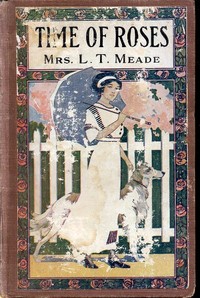
For The Time of Roses — Text and Context, the stored edition analysis reports 83,314 words, 6 hr 3 min estimated reading time, and 9 detected text sections.
The text analysis averages about 12.8 words per sentence, while the detected sections provide another way to judge how the source is divided.
Project Gutenberg metadata also associates the work with “London (England) -- Fiction,” connecting these edition facts with the source record’s subject description.
Explore this collection
These alternatives are selected using recorded categories and estimated reading time.
About 362 minutes
Historical Psychological Social Fiction
83,051 recorded words. 1 minutes difference from this book's estimate.
View Gutenberg source #19717About 366 minutes
Historical Psychological Social Fiction
84,162 recorded words. 3 minutes difference from this book's estimate.
View Gutenberg source #26282About 366 minutes
Historical Psychological Social Fiction
83,992 recorded words. 3 minutes difference from this book's estimate.
View Gutenberg source #33787Search stored excerpts and compare books → Choose by your preferences →
Choices use stored catalog measurements. Estimates vary with reading speed. A shared category is a catalog label, not a claim that two books have the same argument or literary quality.
Search reads excerpt text stored with this catalog and links to its associated Gutenberg record. The connection is stored in the site database; this tool does not recheck that every excerpt is word-for-word identical to that external record. Excerpt search does not cover every chapter and does not verify historical publication dates.
Catalog snapshot checked: 2026-09-25. Coverage: 95 public books, 95 available source excerpts.
Read the complete public-domain text at its original source.
Read on Project GutenbergThe novel opens with a precise, almost theatrical description of the 'little Mummy' on a Dawlish platform, her 'half-anxious, half-comical expression' and 'rusty widow's black' immediately signaling a character caught between concern and resilience. Meade’s diction here—'commonplace and plain, and yet in one sense she was neither commonplace nor plain'—establishes a narrative voice that delights in paradox and interior complexity. The dialogue that follows, where the little Mummy muses about the returning Florence and the unknown Miss Sharston, reveals a domestic world where every invitation carries unspoken weight.
Meade differentiates her characters through their speech patterns and descriptive tags. The little Mummy’s internal monologue uses hesitant, qualifying language: 'I don’t know whether I am glad or sorry.' In contrast, Mrs. Aylmer speaks in imperatives and conditional threats: 'I will not take your decision now, you foolish boy.' The narrator’s own voice leans into moral commentary, as when Kitty Sharston is described as thinking of wealth 'for what it could do to promote the happiness of others.' Such phrasing aligns Kitty with a sentimental ideal, while Bertha Keys is introduced through Kitty’s memory of her having 'behaved so badly.' The authorial choice to filter Bertha’s reappearance through Kitty’s startled recognition—'Why, Kitty, you have turned quite white'—builds suspense without direct exposition.
Meade often embeds dialogue within physical settings that amplify emotional stakes. The lake at Aylmer’s Court becomes a stage: Kitty spots Bertha rowing, and the pleasure-boat setting contrasts with the tension of their past. Gestures carry meaning—Kitty ‘suddenly squeezed his hand’ when recognizing Bertha. Earlier, Maurice’s face turns ‘white with suppressed feeling’ during Mrs. Aylmer’s ultimatum. These physical reactions, paired with clipped dialogue, create a rhythm of restraint and eruption. The narrator’s eye for small actions—a ‘little toss which was not in the least saucy’—adds nuance to character interactions, suggesting that what is unsaid often matters as much as the spoken word.
The narrator frequently steps in to interpret characters’ motives, a technique that guides reader sympathy. Of Kitty, we are told she ‘would always be simple-hearted and think of wealth in the right spirit.’ This direct moral framing is typical of Meade’s authorial choices, where inner virtue is explicitly named. The little Mummy’s ‘character had developed during the last few years, and rather for the better’ similarly telegraphs a judgment. Such commentary, while overt, creates a stable moral compass within the story. It also reflects the novel’s interest in social values—characters are judged by their use of money and influence, as when Mrs. Aylmer ties inheritance to non-interference in Florence’s career.
Several motifs recur across the excerpts. The phrase ‘the little Mummy’ appears with affectionate repetition, cementing her as a touchstone. Roses, referenced in the title and epigraph, surface in chapter headings like ‘All the Roses Are Dead’ and ‘Rose View,’ suggesting a symbolic arc. The structure of arrivals and departures—Dawlish station, the drive up Aylmer’s Court avenue—frames key encounters. Meade also uses letters and telegrams as plot devices (e.g., ‘The Telegram,’ ‘A Letter from Home’), creating a rhythm of anticipation. These structural choices, visible even in the table of contents, indicate a careful orchestration of suspense and resolution.
Readers attentive to Meade’s craft will notice how she balances sentiment with sharp social observation. The novel’s reliance on dialogue and descriptive tags to convey character—rather than extended interiority—invites a focus on what is performed versus what is felt. The excerpts suggest a world where every word and gesture carries consequence, and where the narrator’s moral voice provides a steady guide through the intrigues of inheritance, authorship, and romance.
That rainy afternoon, I kept returning to the anxious tremble in little Mummy’s speech, how her softness buckled against Mrs. Aylmer’s steel. The moral weight of every word lingered, and almost without deciding, I reached for an older, quieter conversation about duty and domestic choice: Coelebs In Search of a Wife — Reading Notes. The pages felt like eavesdropping on the same wary dance, just in different costume.
Build a private reading journal entry for this title.