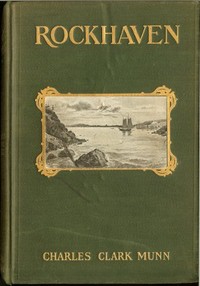
Rockhaven — Story, Setting & Ideas

(3 User reviews)   470
Munn, Charles Clark, 1848-1917, Merrill, Frank T., 1848-1923 [Illustrator] Project Gutenberg 2010 Not confirmed
Islands -- Fiction; Love stories; New England -- Fiction; Swindlers and swindling -- Fiction Readers of public-domain and historical texts
Project Gutenberg digital edition en

Edition facts

Words 83,992
Reading time 366 min
Text sections 8

The source record for Rockhaven — Story, Setting & Ideas measures this digital text at 83,992 words, 6 hr 6 min estimated reading time, and 8 detected text sections.

The text analysis averages about 23.3 words per sentence, while the detected sections provide another way to judge how the source is divided.

Project Gutenberg metadata also associates the work with “Islands -- Fiction,” connecting these edition facts with the source record’s subject description.

Charles Clark Munn's 1902 novel uses a shifting narrative voice—from Jess Hutton's dialect-heavy opening to Winn Hardy's introspective third-person—to chart a romance and stock swindle on a Maine island, with pacing that alternates between leisurely coastal description and tense financial scheming.
Share
Editorial Edition Score 4.8/5

Calculated from edition completeness, EPUB availability, text structure and catalogue metadata. Not a user rating.

How this score is calculated
  • Description quality20 pts
  • Title & short description10 pts
  • Source metadata20 pts
  • Text length15 pts
  • Chapters / structure15 pts
  • EPUB file integrity20 pts

Total of 100 points, scaled to a 2.5-5.0 range. Editions with an empty description or a missing EPUB file are not scored.

Edition quality

Read the Text

Bush was a good deal took back, fer he didn't know the joke, 'n' 'lowed Bill had the tremens. 'Better go back to yer shanty, ye sot,' he said, 'an' when you git sober come here 'n' I'll talk with ye,' an' with that he shet the door 'n' Bill jist laid down 'n' bellowed like a calf. 'N' he didn't go back to his shanty, either, that night, not by a jugful; he'd seen 'nough o' that spot ter last him quite a spell. 'N' when he did thar warn't nuthin' out o' ordinary, fer we'd chucked the hogfish off the rocks, 'n' 'twas more 'n a year 'fore Bill found out the trick we played, 'n' in all that time he kept sober. He did find out arter a spell, fer a joke like that can't be kept allus, 'n' when Bill did, he took ter drink agin, 'n' finally jumped off the dock one night in a fit o' the jims 'n' that was the last o' him. It's hard to larn an old dog new tricks."

For an hour the little crowd of Jess Hutton's friends lingered, wondering and speculating on what the outcome of this investment in a granite ledge would be. To most it seemed a piece of folly or the act of a madman. These worthless rocks had stared them in the face so many years, had so interfered with house building, or the convenient placing of fish racks, or road making, that they had one and all come to hate their very sight. In their estimation they were a nuisance and a curse, and for any sane man to buy twenty acres of ledge to quarry and transport five hundred miles, seemed worse than folly.

Then, having given due expression to this common sentiment, and congratulating Jess upon his good luck, they shook hands with him and went their way. And when the sound of their footsteps upon the one narrow plank walk of Rockhaven had ceased, and only the murmur of the near-by ocean was heard, Jess, as was his wont when lonesome, drew his old brown fiddle from its hiding place and sought consolation from its strings. And also, as usual, the melodies were the songs of Bonnie Scotland.

Winn Hardy, born and reared where the tinkle of the cow bells on the hillside pastures, or the call of the village church bell on Sunday was the most exciting incident, and a crossroads schoolhouse the only temple of learning, reached the age of fourteen as utterly untainted by knowledge of the world as the birds that annually visited the old farm orchards. And then came a catastrophe in his life which ended in two freshly made graves in the village cemetery, and he was thrust into the whirl of city life, to make his home with a widowed aunt, a Mrs. Converse, who felt it her duty to complete his education by a two years' course at a business college.

It was a scant educational outfit with which to carve his way to fame and fortune, but many a man succeeds who has less, and Winn might have been worse off.

He had one unfortunate and serious fact to contend with, however, and that was a mercurial disposition. When the world and his associates seemed to smile, he soared amid the rosy clouds of optimism, and when things went wrong, he lost his courage.

His first step in wage-earning (a menial position in a store, with scanty pay which scarce sufficed to clothe him) soon convinced him how hard a task earning a livelihood was, and that no one obtained a penny unless he fought for it. Then through the influence of his aunt, he obtained an easier berth as copy clerk in the office of Weston & Hill, whose business was the investing of other people's money, and while his hours of service were less, his pay was no better. Three years of this resulted in slow advancement to a junior bookkeeper's desk and better pay. It also broadened his list of acquaintances, for he joined a club, the membership of which was decidedly mixed, and not all of the best kind of associates for Winn.

His aunt, a shallow though well-meaning woman, devoted to church work, gossip, and her pet poodle, considering Winn an unfortunate addition to her cares, held but scant influence over him. She furnished him a home to sleep and eat in without cost, urged him to attend church with her, cautioned him against evil associates; but beyond that she could not and did not go. So Winn drifted. He saved a little money, realizing that he must, or be forever helpless and dependent; he learned the slang of the town and its ways, and forgot for a time the wholesome lessons of his early life. He also grew more mercurial, and, worse than that, he grew cynical.

On all sides, and go where he would, the arrogance of wealth seemed to hedge him about and force upon him the realization that he was but a poorly paid bookkeeper, and not likely to become aught else. And then a worse mishap befell him--he met and became attached to Jack Nickerson.

There is in every club, and in every walk in life, wherever a young man's feet may stray, some one it were better he never met--a Mephistopheles in male garb, whose wit and ways of pleasure-taking are alluring, whose manners are perfect, whose pockets are well filled; and alas, whose morals are a matter of convenience.

That Winn, honest and wholesome-minded country-born fellow that he was, should be attracted by this product of fast city life is not strange. It is the attraction that allures the moth toward the flame, the good toward evil. Follow Nickerson in that course, Winn would not and did not; he merely admired him for his wit, felt half tempted to emulate his vices, absorbed his scepticism--for Jack Nickerson in addition to his vices was a cynic of the most implacable sort. With him all religion was hypocrisy, all virtue a folly, and all truth a farce. He had income sufficient to live well upon, gambled for a pastime, was at the race tracks whenever chance offered, was cheek by jowl with the sporting fraternity, a man about town and hail fellow well met with all.

Per contra, he was generous to a fault, laughed most when he uttered his sharpest sneers, was polished and refined in his tastes and a gentleman always.

One distinguished novelist has deified such a man, and made him a hero of her numerous tales.

To Winn he appealed more as a fascinating, world-wise sceptic, whose shafts of satire were gospel truths, and whose Sybarite sort of existence was worthy of emulation, if one only had the money to follow it.

Then, as if to cap the climax and Winn's cynical education, he fell in love with Ethel Sherman, a beauty and a natural-born flirt, whose ideas of life and maternal training had convinced her that marriage was a matter of business, and a means by which to obtain position and wealth.

Her family were people of moderate means, living near neighbors to Winn's aunt and attending the same church. She had an elder sister, Grace, who had, in her estimation, wrecked her life by marrying a poor man. And when Winn Hardy, young, handsome and callow, first met her, she was just home from boarding-school, ready to spread her social wings, and ripe for conquest.

Winn's aunt was also somewhat to blame in the matter, for she, like many good women, loved to dabble in match-making, and in her simple mind fancied it a wise move to bring one about between Ethel and Winn.

Its results were disastrous to his peace of mind, for, after dancing attendance for a year and spending half he earned on flowers and theatre tickets, his suit was laughed at and he was assured that only a rich young man was eligible to her favor.

Then he went back to Jack Nickerson, and, though he outgrew his folly, his impulsive nature became more pronounced and he a more bitter cynic than ever. For two years he was but a cipher in business and social life, a poorly paid bookkeeper in the office of Weston & Hill, a drop in the rushing, pushing, strenuous life of the city; and then came a change.

THE ROCKHAVEN GRANITE COMPANY

"Please step into my private office, Mr. Hardy," said J. Malcolm Weston, head of Weston & Hill, bankers, brokers, and investment securities, as stated on the two massive nickel plates that flanked their doorway, "I have a matter of business to discuss with you."

Ordinarily Mr. J. Malcolm Weston would have said, "You may step into my private office, Mr. Hardy," when, as in this case, he addressed his bookkeeper, for Mr. Weston never forgot his dignity in the presence of a subordinate. It may be added that he never forgot to address a possible customer as though he owned millions, for J. Malcolm Weston was master of the fine art of obsequious deference, and his persuasive smile, cordial hand grasp, and copious use of flowery language had cost many a cautious man hundreds of dollars. Mr. Weston can best be described as unctuous, and belonged to that class of men who part their names and hair in the middle, but make no division in money matters, merely taking it all.

When Winn Hardy had obeyed his employer's suave invitation and was seated in his presence, he was made to feel that he had suddenly stepped into a sunnier clime.

"It gives me great pleasure, Mr. Hardy," continued Weston, "to inform you that we have decided to enlarge your sphere of duty with us, and I may say, responsibilities. Mr. Hill and myself have considered the matter carefully, and, in view of your faithful and efficient services, we shall from now on confide to you the management of an outside matter of great importance. Please examine this prospectus, which will appear to-morrow in all the papers of this city."

Winn took the typewritten document tendered him and carefully scanned its contents. To show its importance it is given in full, though with reduced headlines:--

THE ROCKHAVEN GRANITE COMPANY. CAPITAL, $1,000,000.00. Stock non-assessable. Shares $1.00 each. Par Value, $10.00. President, J. MALCOLM WESTON. BOARD OF DIRECTORS: J. Malcolm Weston of Weston & Hill. William M. Simmons, Member of Stock Exchange. William B. Codman, President National Bank of Discount. Samuel H. Wiseman, Real Estate Broker. L. Orton Brown, Secretary Board of Trade. Office of Company: Weston & Hill, Bankers, Brokers, and Investments.

This Company has purchased and now owns the finest granite quarries in the world, over one mile in length and half that in width, fronting upon the land-locked harbor on the island of Rockhaven. It has a full and perfect equipment of steam drills, engines, derricks, an excellent wharf, vessels for transporting freight, and all modern appliances for carrying on the business of quarrying.

It is well known that the rapid growth of architectural taste produces an ever increasing demand for this, the best of all building stone, and as we furnish the finest quality of granite, having that beautiful pink tint so much admired by architects, you can readily see that our advantages and prospects are limitless. This is no delusive scheme for gold mining or oil boring, but a solid and practical business that guarantees sure returns and certain dividends.

Our supply of granite is exhaustless, the market limitless, and all that we need to develop this quarry and obtain lucrative returns is a little additional capital. For this purpose fifty thousand shares of the capital stock are now offered for sale at one dollar per share, so that the investor may receive the benefit of the advance to par which will follow, as well as the liberal dividends which will surely accrue.

The price of stock will be advanced from time to time, as it is taken up.

Subscription books now open at the office of

WESTON & HILL, Financiers.

"It reads well," observed Winn, after he had perused this alluring advertisement, "and I should imagine an investment in a granite quarry might seem a safe one."

"Yes, decidedly safe as well as secure," replied J. Malcolm Weston, with a twinkle in his steely blue eyes not observed by Winn. "I wrote that ad with the intention of attracting investors who desire a solid investment for their money, and fancy I have succeeded. You noticed, perhaps, my allusion to gold mines and oil wells that have recently proved so elusive." Then taking a box of cigars, and passing them to Winn, and elevating his feet to a desk, as if to enjoy the telling of a pleasant episode, Mr. Weston continued: "That prospectus (which I pride myself is an artistic piece of work) will attract just the class of men who have grown suspicious of all sorts of schemes. It is this element of solidity and certainty that we shall elaborate upon. Now I will tell you about our plan and how you are to assist us in carrying it out. As you may recall, I was away last summer with Simmons on his yacht, and while on our trip we landed upon an island called Rockhaven, up the north coast. It is sort of a double island, half cut in two by a safe harbor, and populated by a few hundred simple fisher-folk. We remained there a few days looking over the island, and I noticed that some one had started quarrying the granite of which the island is composed. That, and the location of the quarry, which faced this harbor, set me thinking. It ended in my inquiring out the owner, an eccentric old fellow who kept a small store and fiddled when he hadn't any customers, and finally buying the quarry. I paid him one thousand down, and we are to pay him one thousand more when deeds are passed. We are now going to send you up there to complete the purchase, paying him the balance, if you can, in stock; then hire men, improve the dock, set up the machinery we shall send you, and begin quarrying operations. That will be one of your duties. The other, and principal, one will be to get the natives interested in this home industry, and sell stock to them. To this end it may be necessary for you to give a little away to those whose influence may be of value. We have already booked several orders for building stone, which you will get out as per specifications and shipments. It will be necessary for you to hire one or two vessels for this purpose, or else contract for delivery of stone to us at so much per cargo. There is a small steamer which makes regular trips to this island, so we can reach you by mail.

"Now there is another matter, also of great importance. In order to stimulate your interest in the success of this enterprise, we shall make you a present of five hundred shares of this stock provided you can raise the money to purchase, at one dollar per share, another block of five hundred, or, what would answer as well, induce your aunt to do so."

It was the glittering bait, intended by the wily Weston to catch and hold his dupe, Winn Hardy.

"I have some money laid away," answered Winn, his sense of caution obscured by this alluring offer, "and with a little help from my aunt, I feel sure I can manage it; at least, I will try."

"We do not need this investment of five hundred dollars on your part, Mr. Hardy," continued Weston, in a grandiloquent tone; "as you must be aware, it is but a drop in the bucket, and we only wish it to induce your more hearty cooeperation in pushing this enterprise to a successful ending. If we make money, as we are sure to do, you will also share in it. It is needless for me to tell you that this is the golden opportunity of your life, and if you take hold with a will, and not only manage this quarry with good business discretion, but, what is of more importance, sell all the stock you can, you will reap a small fortune. This enterprise is sure to be a money-maker and we expect inside of a year to see Rockhaven go to ten, twenty, or possibly thirty dollars per share."

And Winn Hardy, though sophisticated in a minor degree, believed it, and true to his nature, leaped at once into the clouds, where sudden riches and all that follows seemed within his grasp. Not only did he easily persuade his excellent, though credulous, aunt, to lend him the money he needed, but when he left for his new field of labor, he had so impressed her with his newly acquired delusion that she made haste to call upon Weston & Hill and invest a few thousand herself.

How disastrous that venture proved and how much woe and sorrow followed need not be specified at present. True to her feminine nature, she told no one, not even Winn, of her investment; and until the meteoric career of Rockhaven had become ancient history on the street, only the books of those shrewd schemers and her own safe deposit box knew her secret.

WHERE THE SEA-GULLS COME

Like a pair of Titanic spectacles joined with a bridge of granite, the two halves of Rockhaven faced the Atlantic billows, as grim and defiant as when Leif Ericson's crew of fearless Norsemen sailed into its beautiful harbor. With a coast line of bold cliffs, indented by occasional fissures and crested with stunted spruce, the interior, sloping toward the centre, hears only the whisper of the ocean winds.

Rockhaven has a history, and it is one filled with the pathos of poverty, from that day, long ago, when Captain Carver first sailed into its land-locked harbor to split, salt, and dry his sloop load of cod on the sunny slope of a granite ledge, until now, when two straggling villages of tiny houses, interspersed with racks for drying cod, a few untidy fishing smacks tied up at its small wharves, and a little steamboat that daily journeys back and forth to the main land, thirty miles distant, entitles it to be called inhabited. In that history also is incorporated many ghastly tales of shipwreck on its forbidding and wave-beaten shores, of long winters when its ledges and ravines were buried beneath a pall of snow, its little fleet of fishermen storm-stayed in the harbor, and food and fuel scarce. It also has its romantic tales of love and waiting to end in despair, when some fisher boy sailed away and never came back; and one that had a tragic ending, when a fond and foolish maiden ended years of waiting by hanging herself in the old tide mill.

And, too, it has had its religious revival, when a wave of Bible reading and conversion swept over its poorly fed people, to be followed by a split in its one Baptist church on the merits and truths of close communion or its opposite, to end in the formation of another.

It also had its moods, fair and charming when the warm south wind barely ripples the blue sea about, the wild roses smile between its granite ledges, and the sea-gulls sail leisurely over them; or else gloomy and solemn when it lies hid under a pall of fog while the ocean surges boom and bellow along its rock-ribbed shore.

On the inner and right-hand shore of the secure harbor, a small fishing village fringes both sides of a long street, and at the head of the harbor, one mile away, stands another hamlet. The first and larger village is called Rockhaven, the other Northaven. Each has its little church and schoolhouse, also used for town meetings, its one or two general stores, and a post-office. Those in Rockhaven, where fishing is the sole industry, are permeated with that salty odor of cured fish, combined with tar, coffee, and kerosene; and scattered over the interior are a score of modest farmhouses.

At one end of the harbor, and where the village of Northaven stands, a natural gateway of rock almost cuts off a portion of the harbor, and here was an old tide mill, built of unhewn stone, but now unused, its roof fallen in, its gates rotted away, and the abutments that once held it in place now used to support a bridge.

Rockhaven opens not with its protagonist but with Jess Hutton, the island storekeeper, addressing a crowd in thick coastal dialect: "It ain't more'n onct in a lifetime... that luck comes thick 'n' fat." This colloquial voice, rich with dropped consonants and contractions, establishes a communal, oral tone that contrasts sharply with the later third-person narration centered on Winn Hardy. The novel's language thus moves from the vernacular of Rockhaven's inhabitants to a more literary register as the plot shifts between island life and the machinations of the Rockhaven Granite Company. The pacing mirrors this duality: early chapters linger on scenic description and local character, while later sections accelerate into the "bubble" of stock speculation and its bursting, creating a rhythm that alternates between idyllic stasis and financial crisis.

Dialect and Diction: Two Registers

The excerpts reveal a deliberate contrast in linguistic registers. Jess Hutton's speech in Chapter I is marked by contractions like "ain't" and "'n'" and colloquial phrases such as "injie yerselves." This vernacular grounds the reader in Rockhaven's insular community. In contrast, the narration around Winn Hardy employs standard literary English, with sentences like "The life of suspense now forced upon Winn was not agreeable." The shift is not merely stylistic; it signals a thematic divide between the island's authentic, oral culture and the outside world's written, commercial transactions. When Winn reflects on his "false position toward all these people except Jess," the language itself underscores his alienation. The novel thus uses diction to map social boundaries: the granite company's schemes are discussed in formal terms, while local gatherings are rendered in dialect, creating a linguistic tension that mirrors the plot's central conflict.

Pacing Through Landscape and Suspense

Munn controls narrative tempo by alternating expansive landscape description with compressed moments of psychological tension. In Chapter XXV, the passage describing the gorge—"the white-crested billows tossing the rockweed and brown kelpie aloft"—slows time, inviting the reader to inhabit the scene alongside Winn. This lyrical pause contrasts with the earlier, terse summary of his dilemma: "He had too much inborn ambition... never again could he fill a menial position." The pacing quickens when financial stakes are introduced, as in the chapter titles "The Growth of a Bubble" and "The Bubble bursts," which compress weeks of speculation into a few pages. The effect is a rhythm that mirrors the emotional arc: calm interludes on the island punctuated by bursts of anxiety over stock prices and moral choices.

Narrative Voice and the Unreliable Insider

The third-person narrator maintains a limited omniscience, often focalized through Winn's perspective but occasionally pulling back to report community reactions. In the opening, the narrator reports Jess's words directly, but soon adopts a more detached tone: "For Jess Hutton... had sold a few acres of granite ledge he set no value upon." This distance allows the reader to perceive irony that the characters may miss. Later, when Winn resolves to confide in Mona, the narrator comments, "be it said here that when a man feels that way toward a woman, love's silken cord has been knotted about his heart." Such asides create a confiding, almost editorial voice that guides interpretation without fully entering any character's mind. The effect is a narrative stance that is both intimate and judgmental, aligning the reader with Winn's growing moral awareness while keeping the larger swindle in view.

Readers attentive to voice will note how Munn uses dialect not as mere local color but as a marker of authenticity, set against the polished deceptions of the granite company. The novel's shifts in pace—from meditative coastal scenes to rapid-fire financial dealings—reward attention to chapter breaks and descriptive passages. For a full appreciation, track how the narrative's linguistic register changes when characters move between the island and the mainland, and observe how the tempo of disclosure mirrors the swelling and collapse of the speculative bubble.

There’s something about Munn’s shifting voices—Jess’s rough charm, Winn’s quiet worry—that feels like watching familiar tides turn. It made me think of another kind of growing up, the gentler sort found in A College Girl — Reading Companion, where the introspection lands softer but just as true. Funny how old books hold such different weather, yet both leave that same ache of time passing.

John Williams
3 weeks ago

Samuel Flores
3 weeks ago

Daniel Flores
3 weeks ago

4.5
4.5 out of 5 (3 User reviews )

Add a Review

Your Rating *
There are no comments for this eBook.

Reader reflection

What did you think of this book?

Answer a few questions and save a private reflection on this device.

Your progress 0 / 10
1

Which reading stage best describes you?

2

What was your overall reaction to the book?

3

Would you recommend this book to another reader?

4

How much effort did this book require?

Related eBooks