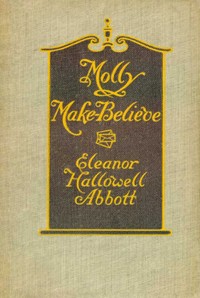
Molly Make-Believe — A Closer Reading

(1 User reviews)   171
Abbott, Eleanor Hallowell, 1872-1958, Tittle, Walter, 1883-1966 [Illustrator] Project Gutenberg 2006 Not confirmed
Mate selection -- Fiction; Man-woman relationships -- Fiction; Letter writing -- Fiction; Invalids -- Fiction Readers of public-domain and historical texts
Project Gutenberg digital edition en

Edition facts

Words 29,070
Reading time 127 min
Text sections 4

The catalog record for Molly Make-Believe — A Closer Reading provides practical reading context through 29,070 words, 2 hr 7 min estimated reading time, and 4 detected text sections.

The text analysis averages about 17.2 words per sentence, while the detected sections provide another way to judge how the source is divided.

Project Gutenberg metadata also associates the work with “Mate selection -- Fiction,” connecting these edition facts with the source record’s subject description.

An invalid's correspondence with a mysterious 'Molly' becomes a playful, risky game of imagination, shadowing his engagement to a practical woman. The novel's structure pivots on letters, recurring images of winter confinement, and the tension between real and invented intimacy.
Share
Editorial Edition Score 4.6/5

Calculated from edition completeness, EPUB availability, text structure and catalogue metadata. Not a user rating.

How this score is calculated
  • Description quality20 pts
  • Title & short description10 pts
  • Source metadata20 pts
  • Text length15 pts
  • Chapters / structure15 pts
  • EPUB file integrity20 pts

Total of 100 points, scaled to a 2.5-5.0 range. Editions with an empty description or a missing EPUB file are not scored.

Edition quality

Read the Text

Cornelia had referred so scathingly.

It was a dainty bit of gray Japanese tissue with the crimson-inked text glowing gaily across it. Something in the whole color scheme and the riotously quirky typography suggested at once the audaciously original work of some young art student who was fairly splashing her way along the road to financial independence, if not to fame. And this is what the little circular said, flushing redder and redder and redder with each ingenuous statement:

THE SERIAL-LETTER COMPANY.

Comfort and entertainment Furnished for Invalids, Travelers, and all Lonely People.

Reliable as your Daily Paper. Fanciful as your Favorite Story Magazine. Personal as a Message from your Best Friend. Offering all the Satisfaction of _receiving_ Letters with no Possible Obligation or even Opportunity of Answering Them.

Letters from a Japanese Fairy. (Especially acceptable Bi-weekly. to a Sick Child. Fragrant with Incense and Sandal Wood. Vivid with purple and orange and scarlet. Lavishly interspersed with the most adorable Japanese toys that you ever saw in your life.)

Letters from a little Son. (Very sturdy. Very Weekly. spunky. Slightly profane.)

Letters from a Little Daughter. (Quaint. Old-Fashioned. Weekly. Daintily Dreamy. Mostly about Dolls.)

Letters from a Banda-Sea Pirate. (Luxuriantly tropical. Monthly. Salter than the Sea. Sharper than Coral. Unmitigatedly murderous. Altogether blood-curdling.)

Letters from a Gray-Plush Squirrel. (Sure to please Nature Irregular. Lovers of Either Sex. Pungent with wood-lore. Prowly. Scampery. Deliciously wild. Apt to be just a little bit messy perhaps with roots and leaves and nuts.)

Letters from Your Favorite (Biographically consistent. Historical Character. Historically reasonable. Fortnightly. Most vivaciously human. Really unique.)

Love Letters. (Three grades: Shy. Daily. Medium. Very Intense.)

In ordering letters kindly state approximate age, prevalent tastes,--and in case of invalidism, the presumable severity of illness. For price list, etc., refer to opposite page. Address all communications to Serial Letter Co. Box, etc., etc.

As Stanton finished reading the last solemn business detail he crumpled up the circular into a little gray wad, and pressed his blond head back into the pillows and grinned and grinned.

"Good enough!" he chuckled. "If Cornelia won't write to me there seem to be lots of other congenial souls who will--cannibals and rodents and kiddies. All the same--" he ruminated suddenly: "All the same I'll wager that there's an awfully decent little brain working away behind all that red ink and nonsense."

Still grinning he conjured up the vision of some grim-faced spinster-subscriber in a desolate country town starting out at last for the first time in her life, with real, cheery self-importance, rain or shine, to join the laughing, jostling, deliriously human Saturday night crowd at the village post-office--herself the only person whose expected letter never failed to come! From Squirrel or Pirate or Hopping Hottentot--what did it matter to her? Just the envelope alone was worth the price of the subscription. How the pink-cheeked high school girls elbowed each other to get a peep at the post-mark! How the--. Better still, perhaps some hopelessly unpopular man in a dingy city office would go running up the last steps just a little, wee bit faster--say the second and fourth Mondays in the month--because of even a bought, made-up letter from Mary Queen of Scots that he knew absolutely without slip or blunder would be waiting there for him on his dusty, ink-stained desk among all the litter of bills and invoices concerning--shoe leather. Whether 'Mary Queen of Scots' prattled pertly of ancient English politics, or whimpered piteously about dull-colored modern fashions--what did it matter so long as the letter came, and smelled of faded fleur-de-lis--or of Darnley's tobacco smoke? Altogether pleased by the vividness of both these pictures Stanton turned quite amiably to his breakfast and gulped down a lukewarm bowl of milk without half his usual complaint.

It was almost noon before his troubles commenced again. Then like a raging hot tide, the pain began in the soft, fleshy soles of his feet and mounted up inch by inch through the calves of his legs, through his aching thighs, through his tortured back, through his cringing neck, till the whole reeking misery seemed to foam and froth in his brain in an utter frenzy of furious resentment. Again the day dragged by with maddening monotony and loneliness. Again the clock mocked him, and the postman shirked him, and the janitor forgot him. Again the big, black night came crowding down and stung him and smothered him into a countless number of new torments.

Again the treacherous Morning Nap wiped out all traces of the pain and left the doctor still mercilessly obdurate on the subject of an opiate.

And Cornelia did not write.

Not till the fifth day did a brief little Southern note arrive informing him of the ordinary vital truths concerning a comfortable journey, and expressing a chaste hope that he would not forget her. Not even surprise, not even curiosity, tempted Stanton to wade twice through the fashionable, angular handwriting. Dully impersonal, bleak as the shadow of a brown leaf across a block of gray granite, plainly--unforgivably--written with ink and ink only, the stupid, loveless page slipped through his fingers to the floor.

After the long waiting and the fretful impatience of the past few days there were only two plausible ways in which to treat such a letter. One way was with anger. One way was with amusement. With conscientious effort Stanton finally summoned a real smile to his lips.

Stretching out perilously from his snug bed he gathered the waste-basket into his arms and commenced to dig in it like a sportive terrier. After a messy minute or two he successfully excavated the crumpled little gray tissue circular and smoothed it out carefully on his humped-up knees. The expression in his eyes all the time was quite a curious mixture of mischief and malice and rheumatism.

"After all" he reasoned, out of one corner of his mouth, "After all, perhaps I have misjudged Cornelia. Maybe it's only that she really doesn't know just what a love-letter OUGHT to be like."

Then with a slobbering fountain-pen and a few exclamations he proceeded to write out a rather large check and a very small note.

"TO THE SERIAL-LETTER CO." he addressed himself brazenly. "For the enclosed check--which you will notice doubles the amount of your advertised price--kindly enter my name for a six weeks' special 'edition de luxe' subscription to one of your love-letter serials. (Any old ardor that comes most convenient) Approximate age of victim: 32. Business status: rubber broker. Prevalent tastes: To be able to sit up and eat and drink and smoke and go to the office the way other fellows do. Nature of illness: The meanest kind of rheumatism. Kindly deliver said letters as early and often as possible!

"Very truly yours, etc."

Sorrowfully then for a moment he studied the depleted balance in his check-book. "Of course" he argued, not unguiltily, "Of course that check was just the amount that I was planning to spend on a turquoise-studded belt for Cornelia's birthday; but if Cornelia's brains really need more adorning than does her body--if this special investment, in fact, will mean more to both of us in the long run than a dozen turquoise belts--."

Big and bland and blond and beautiful, Cornelia's physical personality loomed up suddenly in his memory--so big, in fact, so bland, so blond, so splendidly beautiful, that he realized abruptly with a strange little tucked feeling in his heart that the question of Cornelia's "brains" had never yet occurred to him. Pushing the thought impatiently aside he sank back luxuriantly again into his pillows, and grinned without any perceptible effort at all as he planned adroitly how he would paste the Serial Love Letters one by one into the gaudiest looking scrap-book that he could find and present it to Cornelia on her birthday as a text-book for the "newly engaged" girl. And he hoped and prayed with all his heart that every individual letter would be printed with crimson ink on a violet-scented page and would fairly reek from date to signature with all the joyous, ecstatic silliness that graces either an old-fashioned novel or a modern breach-of-promise suit.

So, quite worn out at last with all this unwonted excitement, he drowsed off to sleep for as long as ten minutes and dreamed that he was a--bigamist.

The next day and the next night were stale and mean and musty with a drizzling winter rain. But the following morning crashed inconsiderately into the world's limp face like a snowball spiked with icicles. Gasping for breath and crunching for foothold the sidewalk people breasted the gritty cold. Puckered with chills and goose-flesh, the fireside people huddled and sneezed around their respective hearths. Shivering like the ague between his cotton-flannel blankets, Stanton's courage fairly raced the mercury in its downward course. By noon his teeth were chattering like a mouthful of cracked ice. By night the sob in his thirsty throat was like a lump of salt and snow. But nothing outdoors or in, from morning till night, was half as wretchedly cold and clammy as the rapidly congealing hot-water bottle that slopped and gurgled between his aching shoulders.

It was just after supper when a messenger boy blurted in from the frigid hall with a great gust of cold and a long pasteboard box and a letter.

Frowning with perplexity Stanton's clumsy fingers finally dislodged from the box a big, soft blanket-wrapper with an astonishingly strange, blurry pattern of green and red against a somber background of rusty black. With increasing amazement he picked up the accompanying letter and scanned it hastily.

"Dear Lad," the letter began quite intimately. But it was not signed "Cornelia". It was signed "Molly"!

Turning nervously back to the box's wrapping-paper Stanton read once more the perfectly plain, perfectly unmistakable name and address,--his own, repeated in absolute duplicate on the envelope. Quicker than his mental comprehension mere physical embarrassment began to flush across his cheek-bones. Then suddenly the whole truth dawned on him: The first installment of his Serial-Love-Letter had arrived.

"But I thought--thought it would be type-written," he stammered miserably to himself. "I thought it would be a--be a--hectographed kind of a thing. Why, hang it all, it's a real letter! And when I doubled my check and called for a special edition de luxe--I wasn't sitting up on my hind legs begging for real presents!"

But "Dear Lad" persisted the pleasant, round, almost childish handwriting:

"I could have _cried_ yesterday when I got your letter telling me how sick you were. Yes!--But crying wouldn't 'comfy' you any, would it? So just to send you right-off-quick something to prove that I'm thinking of you, here's a great, rollicking woolly wrapper to keep you snug and warm this very night. I wonder if it would interest you any at all to know that it is made out of a most larksome Outlaw up on my grandfather's sweet-meadowed farm,--a really, truly Black Sheep that I've raised all my own sweaters and mittens on for the past five years. Only it takes two whole seasons to raise a blanket-wrapper, so please be awfully much delighted with it. And oh, Mr. Sick Boy, when you look at the funny, blurry colors, couldn't you just please pretend that the tinge of green is the flavor of pleasant pastures, and that the streak of red is the Cardinal Flower that blazed along the edge of the noisy brook?

"Goodby till to-morrow,

With a face so altogether crowded with astonishment that there was no room left in it for pain, Stanton's lame fingers reached out inquisitively and patted the warm, woolly fabric.

"Nice old Lamb--y" he acknowledged judicially.

Then suddenly around the corners of his under lip a little balky smile began to flicker.

"Of course I'll save the letter for Cornelia," he protested, "but no one could really expect me to paste such a scrumptious blanket-wrapper into a scrap-book."

Laboriously wriggling his thinness and his coldness into the black sheep's luxuriant, irresponsible fleece, a bulging side-pocket in the wrapper bruised his hip. Reaching down very temperishly to the pocket he drew forth a small lace-trimmed handkerchief knotted pudgily across a brimming handful of fir-balsam needles. Like a scorching hot August breeze the magic, woodsy fragrance crinkled through his nostrils.

"These people certainly know how to play the game all right," he reasoned whimsically, noting even the consistent little letter "M" embroidered in one corner of the handkerchief.

Then, because he was really very sick and really very tired, he snuggled down into the new blessed warmth and turned his gaunt cheek to the pillow and cupped his hand for sleep like a drowsy child with its nose and mouth burrowed eagerly down into the expectant draught. But the cup did not fill.--Yet scented deep in his curved, empty, balsam-scented fingers lurked--somehow--somewhere--the dregs of a wonderful dream: Boyhood, with the hot, sweet flutter of summer woods, and the pillowing warmth of the soft, sunbaked earth, and the crackle of a twig, and the call of a bird, and the drone of a bee, and the great blue, blue mystery of the sky glinting down through a green-latticed canopy overhead.

For the first time in a whole, cruel tortuous week he actually smiled his way into his morning nap.

When he woke again both the sun and the Doctor were staring pleasantly into his face.

"You look better!" said the Doctor. "And more than that you don't look half so 'cussed cross'."

"Sure," grinned Stanton, with all the deceptive, undauntable optimism of the Just-Awakened.

"Nevertheless," continued the Doctor more soberly, "there ought to be somebody a trifle more interested in you than the janitor to look after your food and your medicine and all that. I'm going to send you a nurse."

"Oh, no!" gasped Stanton. "I don't need one! And frankly--I can't afford one." Shy as a girl, his eyes eluded the doctor's frank stare. "You see," he explained diffidently; "you see, I'm just engaged to be married--and though business is fairly good and all that--my being away from the office six or eight weeks is going to cut like the deuce into my commissions--and roses cost such a horrid price last Fall--and there seems to be a game law on diamonds this year; they practically fine you for buying them, and--"

The Doctor's face brightened irrelevantly. "Is she a Boston young lady?" he queried.

"Oh, yes," beamed Stanton.

"Good!" said the Doctor. "Then of course she can keep some sort of an eye on you. I'd like to see her. I'd like to talk with her--give her just a few general directions as it were."

A flush deeper than any mere love-embarrassment spread suddenly over Stanton's face.

"She isn't here," he acknowledged with barely analyzable mortification. "She's just gone south."

"_Just_ gone south?" repeated the Doctor. "You don't mean--since you've been sick?"

Stanton nodded with a rather wobbly grin, and the Doctor changed the subject abruptly, and busied himself quickly with the least bad-tasting medicine that he could concoct.

Then left alone once more with a short breakfast and a long morning, Stanton sank back gradually into a depression infinitely deeper than his pillows, in which he seemed to realize with bitter contrition that in some strange, unintentional manner his purely innocent, matter-of-fact statement that Cornelia "had just gone south" had assumed the gigantic disloyalty of a public proclamation that the lady of his choice was not quite up to the accepted standard of feminine intelligence or affections, though to save his life he could not recall any single glum word or gloomy gesture that could possibly have conveyed any such erroneous impression to the Doctor.

"Why Cornelia _had_ to go South," he reasoned conscientiously. "Every girl like Cornelia _had_ to go South sometime between November and March. How could any mere man even hope to keep rare, choice, exquisite creatures like that cooped up in a slushy, snowy New England city--when all the bright, gorgeous, rose-blooming South was waiting for them with open arms? 'Open arms'! Apparently it was only 'climates' that were allowed any such privileges with girls like Cornelia. Yet, after all, wasn't it just exactly that very quality of serene, dignified aloofness that had attracted him first to Cornelia among the score of freer-mannered girls of his acquaintance?"

Glumly reverting to his morning paper, he began to read and reread with dogged persistence each item of politics and foreign news--each gibbering advertisement.

At noon the postman dropped some kind of a message through the slit in the door, but the plainly discernible green one-cent stamp forbade any possible hope that it was a letter from the South. At four o'clock again someone thrust an offensive pink gas bill through the letter-slide. At six o'clock Stanton stubbornly shut his eyes up perfectly tight and muffled his ears in the pillow so that he would not even know whether the postman came or not. The only thing that finally roused him to plain, grown-up sense again was the joggle of the janitor's foot kicking mercilessly against the bed.

"Here's your supper," growled the janitor.

On the bare tin tray, tucked in between the cup of gruel and the slice of toast loomed an envelope--a real, rather fat-looking envelope. Instantly from Stanton's mind vanished every conceivable sad thought concerning Cornelia. With his heart thumping like the heart of any love-sick school girl, he reached out and grabbed what he supposed was Cornelia's letter.

But it was post-marked, "Boston"; and the handwriting was quite plainly the handwriting of The Serial-Letter Co.

Muttering an exclamation that was not altogether pretty he threw the letter as far as he could throw it out into the middle of the floor, and turning back to his supper began to crunch his toast furiously like a dragon crunching bones.

At nine o'clock he was still awake. At ten o'clock he was still awake. At eleven o'clock he was still awake. At twelve o'clock he was still awake.... At one o'clock he was almost crazy. By quarter past one, as though fairly hypnotized, his eyes began to rivet themselves on the little bright spot in the rug where the "serial-letter" lay gleaming whitely in a beam of electric light from the street. Finally, in one supreme, childish impulse of petulant curiosity, he scrambled shiveringly out of his blankets with many "O--h's" and "O-u-c-h-'s," recaptured the letter, and took it growlingly back to his warm bed.

Worn out quite as much with the grinding monotony of his rheumatic pains as with their actual acuteness, the new discomfort of straining his eyes under the feeble rays of his night-light seemed almost a pleasant diversion.

The envelope was certainly fat. As he ripped it open, three or four folded papers like sleeping-powders, all duly numbered, "1 A. M.," "2 A. M.," "3 A. M.," "4 A. M." fell out of it. With increasing inquisitiveness he drew forth the letter itself.

"Dear Honey," said the letter quite boldly. Absurd as it was, the phrase crinkled Stanton's heart just the merest trifle.

"There are so many things about your sickness that worry me. Yes there are! I worry about your pain. I worry about the horrid food that you're probably getting. I worry about the coldness of your room. But most of anything in the world I worry about your _sleeplessness_. Of course you _don't_ sleep! That's the trouble with rheumatism. It's such an old Night-Nagger. Now do you know what I'm going to do to you? I'm going to evolve myself into a sort of a Rheumatic Nights Entertainment--for the sole and explicit purpose of trying to while away some of your long, dark hours. Because if you've simply _got_ to stay awake all night long and think--you might just as well be thinking about ME, Carl Stanton. What? Do you dare smile and suggest for a moment that just because of the Absence between us I cannot make myself vivid to you? Ho! Silly boy! Don't you know that the plainest sort of black ink throbs more than some blood--and the touch of the softest hand is a harsh caress compared to the touch of a reasonably shrewd pen? Here--now, I say--this very moment: Lift this letter of mine to your face, and swear--if you're honestly able to--that you can't smell the rose in my hair! A cinnamon rose, would you say--a yellow, flat-faced cinnamon rose? Not quite so lusciously fragrant as those in your grandmother's July garden? A trifle paler? Perceptibly cooler? Something forced into blossom, perhaps, behind brittle glass, under barren winter moonshine? And yet--A-h-h! Hear me laugh! You didn't really mean to let yourself lift the page and smell it, did you? But what did I tell you?

The novel opens with a winter scene so oppressive that the room itself feels cavernous and hostile: a dingy whirl of snow at the window, a smoky gust through the fireplace, and a shadow black as a bear's cave under the table. Carl Stanton, immobilized by rheumatism, is trapped in this frozen interior, his body a battlefield where pain gnaws like a frenzied animal. The only warmth comes from a glass of stale water and a half-eaten grapefruit—details that underscore his isolation. Into this sterile space arrives Cornelia's letter, its angular handwriting stripped of softening leaves, crackling bleakly like an ice-storm. The contrast between Stanton's physical confinement and the imaginative escape offered by letters sets the stage for a story built on the tension between reality and invention.

Letters as Architecture

The narrative is structured around written correspondence, but not as a simple epistolary novel. Instead, letters function as both plot engine and emotional barometer. Cornelia's crisp, businesslike note—refusing daily writing, dismissing love-letters as wasteful—establishes a pragmatic voice that Stanton finds unsatisfying. In contrast, the mysterious Molly's letters (never quoted directly in the excerpts) provoke a different response: they are described as a "delicious, intangible joke," and Stanton guards them jealously, even refusing to burn them. The physical objects—the big box of letters, the inscribed book—become talismans. The doctor warns that this correspondence is a "dangerous game," and indeed the letters create a parallel world that competes with Stanton's real engagement. The structure thus mirrors a psychological duel between two kinds of intimacy: one based on duty and fact, the other on imagination and absence.

The Body in Captivity

Stanton's rheumatism is not merely a plot device but a recurring sensory motif. The pain is described with visceral, almost surreal imagery: a red-hot plaster that "fumed and mulled and sucked at the pain like a hideously poisoned fang," and an agony that goes "jarring and shuddering" through his system. His body is a prison, and the winter outside mirrors his internal chill. Even his fingers are swollen, making Cornelia's letter rustle "bleakly as an ice-storm." This physical vulnerability contrasts sharply with the mental agility he displays in his correspondence with Molly. The doctor's repeated "U—m—m" and his warning to "cut it out" suggest that Stanton's illness makes him susceptible to fantasy. The body's limitations drive the need for imaginative escape, yet the pain remains a grounding reality—a tension that the novel explores through the interplay of physical suffering and emotional risk.

The Joke of Non-Existence

A central ambiguity is whether Molly exists at all. Stanton insists he is most anxious to prove her non-existence, yet he hoards her letters and books with evident fondness. The doctor speculates she might be "colored" (a period euphemism), but Stanton remains cheerfully noncommittal. The phrase "delicious, intangible joke" captures the paradox: Molly is a fiction that yields real pleasure. The novel plays with the idea that a made-up person can be more compelling than a real one. Stanton's engagement to Cornelia is presented as a settled fact—next April is the wedding date—but the emotional energy flows elsewhere. The doctor's warning about future marital discovery—"someone whom I never knew!"—highlights the risk of investing in a phantom. The structure thus hinges on a deliberate uncertainty: the reader, like Stanton, is never sure whether Molly is a real woman or a elaborate game.

Movement Between Confinement and Escape

The story's movement is not geographical but psychological. The opening scene is static: Stanton in bed, the snow at the window. Yet the letters create a sense of travel—to Jacksonville, to South America (via the inscribed book), to an imagined elsewhere. The doctor's advice to burn the letters represents a desire to return to reality, but Stanton resists, choosing instead the "gray film of smoke" from a forbidden cigar. The illustrations listed in the front matter hint at physical movement: a messenger boy with a fox-terrier, a suitcase unpacked, a woman asking "Are you a good boy?" These suggest that later scenes may break out of the sickroom. But in the excerpts, the only journey is inward: into memory, speculation, and the construction of a fictional companion. The novel's structure mirrors this oscillation between the cramped present and the expansive world of the imagination.

Readers attuned to the interplay of voice and silence will find a story that rewards attention to what is not said: the gaps between Cornelia's crisp lines, the unread letters, the joke that is never fully explained. The novel does not resolve the question of Molly's reality; instead, it invites the reader to inhabit Stanton's uncertainty. Pay particular attention to the physical objects—the letters, the book, the cigar—as they carry emotional weight beyond their surface function.

That rainy afternoon, I kept returning to the winter letters in Molly Make-Believe, noticing how the invented warmth felt more real than the engagement itself. Later, half-dreaming, I picked up another volume and found that same uneasy playfulness—social game-playing as its own kind of confinement, equally charming, equally isolating. The Social Gangster — Background and Themes lingered like an echo of that afternoon's quiet, unsettling intimacy.

Camila Campbell
1 week ago

5
5 out of 5 (1 User reviews )

Add a Review

Your Rating *
  • ...
    Julie April Clark - 3 weeks ago
    {'review_type': 'negative', 'content': "Molly Make Believe lacks substance. The premise is promising but poorly executed, with a plot that relies on coincidence and clichés. The protagonist's antics become tiresome, and the romance lacks chemistry. The writing is amateurish at times, with forced dialogue and shallow character development. This book offers little beyond light fluff."}

  • ...
    Dominique Daniel Martinez - 2 weeks ago
    {'review_type': 'neutral', 'content': "Molly Make Believe is a charming read with a likable heroine. The romance is sweet, but the plot is predictable and follows a familiar formula. The secondary characters are a bit clichéd, but they don't detract from the overall enjoyment. It's a light, feel-good book that's perfect when you need a quick, easy read."}

  • ...
    Robert Olsen - 1 week ago
    {'review_type': 'positive', 'content': "Molly Make Believe is a delightful gem that blends romance and self-discovery with wit and warmth. The protagonist, Molly, is endearing and relatable, and her journey is both inspiring and heartwarming. The writing is sharp and engaging, with moments of genuine humor. The story moves at a brisk pace, making it a perfect escape. I couldn't help but smile throughout."}


Reader reflection

Take a moment to reflect on this book

Create a short personal record of your experience with this book.

Your progress 0 / 10
1

Have you finished this book?

2

Was reading this book enjoyable?

3

How likely are you to recommend this book?

4

Did the language feel accessible?

Related eBooks