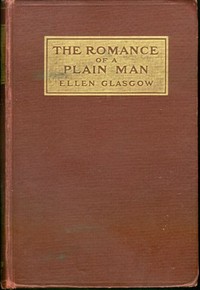
The Romance of a Plain Man — Key Ideas to Explore
Edition facts
Before opening The Romance of a Plain Man — Key Ideas to Explore, the edition data offers a quick orientation: 131,091 words, 9 hr 30 min estimated reading time, and 12 detected text sections.
The text analysis averages about 19.5 words per sentence, while the detected sections provide another way to judge how the source is divided.
Project Gutenberg metadata also associates the work with “Railroads -- Fiction,” connecting these edition facts with the source record’s subject description.
Calculated from edition completeness, EPUB availability, text structure and catalogue metadata. Not a user rating.
How this score is calculated
- Description quality20 pts
- Title & short description10 pts
- Source metadata20 pts
- Text length15 pts
- Chapters / structure15 pts
- EPUB file integrity20 pts
Total of 100 points, scaled to a 2.5-5.0 range. Editions with an empty description or a missing EPUB file are not scored.
Read the Text
There was a second's pause, and then before my father could reach it, the door opened and shut violently, and a woman, in a dripping cloak, holding a little girl by the hand, came from the storm outside, and ran straight to the fire, where she stood shaking the child's wet clothes before the flames. As the light fell over them, I saw that the woman was young and delicate and richly dressed, with a quantity of pale brown hair which the rain and wind had beaten flat against her small frightened face. At the time she was doubtless an unusually pretty creature to a grown-up pair of eyes, but my gaze, burning with curiosity, passed quickly over her to rest upon the little girl, who possessed for me the attraction of my own age and size. She wore red shoes, I saw at my first glance, and a white cloak, which I took to be of fur, though it was probably made of some soft, fuzzy cloth I had never seen. There was a white cap on her head, held by an elastic band under her square little chin, and about her shoulders her hair lay in a profuse, drenched mass of brown, which reminded me in the firelight of the colour of wet November leaves. She was soaked through, and yet as she stood there, with her teeth chattering in the warmth, I was struck by the courage, almost the defiance, with which she returned my gaze. Baby that she was, I felt that she would scorn to cry while my glance was upon her, though there were fresh tear marks on her flushed cheeks, and around her solemn grey eyes that were made more luminous by her broad, heavily arched black eyebrows, which gave her an intense and questioning look. The memory of this look, which was strange in so young a child, remained with me after the colour of her hair and every charming feature in her face were forgotten. Years afterwards I think I could have recognised her in a crowded street by the mingling of light with darkness, of intense black with clear grey, in her sparkling glance.
"I followed the wrong turn," said the pale little woman, breathing hard with a pitiable, frightened sound, while my mother took her dripping cloak from her shoulders, "and I could not keep on because of the rain which came up so heavily. If I could only reach the foot of the hill I might find a carriage to take me up-town."
My father had sprung forward as she entered, and was vigorously stirring the fire, which blazed and crackled merrily in the open grate. She accepted thankfully my mother's efforts to relieve her of her wet wraps, but the little girl drew back haughtily when she was approached, and refused obstinately to slip out of her cloak, from which the water ran in streams to the floor.
"I don't like it here, mamma, it is a common place," she said, in a clear childish voice, and though I hardly grasped the meaning of her words, her tone brought to me for the first time a feeling of shame for my humble surroundings.
"Hush, Sally," replied her mother, "you must dry yourself. These people are very kind."
"But I thought we were going to grandmama's?"
"Grandmama lives up-town, and we are going as soon as the storm has blown over. There, be a good girl and let the little boy take your wet cap."
"I don't want him to take my cap. He is a common boy."
In spite of the fact that she seemed to me to be the most disagreeable little girl I had ever met, the word she had used was lodged unalterably in my memory. In that puzzled instant, I think, began my struggle to rise out of the class in which I belonged by birth; and I remember that I repeated the word "common" in a whisper to myself, while I resolved that I would learn its meaning in order that I might cease to be the unknown thing that it implied.
My mother, who had gone into the kitchen with the dripping cloak in her arms, returned a moment later with a cup of steaming coffee in one hand and a mug of hot milk in the other.
"It's a mercy if you haven't caught your death with an inner chill," she observed in a brisk, kindly tone. "'Twas the way old Mr. Cudlip, whose funeral I'm going to to-morrow, came to his end, and he was as hale, red-faced a body as you ever laid eyes on."
The woman received the cup gratefully, and I could see her poor thin hands tremble as she raised it to her lips.
"Drink the warm milk, dear," she said pleadingly to the disagreeable little girl, who shook her head and drew back with a stiff childish gesture.
"I'm not hungry, thank you," she replied to my mother in her sweet, clear treble. To all further entreaties she returned the same answer, standing there a haughty, though drenched and battered infant, in her soiled white cloak and her red shoes, holding her mop of a muff tightly in both hands.
"I'm not hungry, thank you," she repeated, adding presently in a manner of chill politeness, "give it to the boy."
But the boy was not hungry either, and when my mother, finally taking her at her word, turned, in exasperation, and offered the mug to me, I declined it, also, and stood nervously shifting from one foot to the other, while my hands caught and twisted the fringe of the table-cloth at my back. The big grey eyes of the little girl looked straight into mine, but there was no hint in them that she was aware of my existence. Though her teeth were chattering, and she knew I heard them, she did not relax for an instant from her scornful attitude.
"We were just about to take a mouthful of supper, mum, an' we'd be proud if you an' the little gal would jine us," remarked my father, with an eager hospitality.
"I thank you," replied the woman in her pretty, grateful manner, "but the coffee has restored my strength, and if you will direct me to the hill, I shall be quite able to go on again."
A step passed close to the door on the pavement outside, and I saw her start and clutch the child to her bosom with trembling hands. As she stood there in her shaking terror, I remembered a white kitten I had once seen chased by boys into the area of a deserted house.
"If--if anyone should come to enquire after me, will you be so good as to say nothing of my having been here?" she asked.
"To be sure I will, with all the pleasure in life," responded my father, who, it was evident even to me, had become a victim to her distressed loveliness.
Emboldened by the effusive politeness of my parent, I went up to the little girl and shyly offered her a blossom from my mother's geranium upon the window-sill. A scrap of a hand, as cold as ice when it touched mine, closed over the stem of the flower, and without looking at me, she stood, very erect, with the scarlet geranium grasped stiffly between her fingers.
"I'll take you to the bottom of the hill myself," protested my father, "but I wish you could persuade yourself to try a bite of food befo' you set out in the rain."
"It is important that I should lose no time," answered the woman, drawing her breath quickly through her small white teeth, "but I fear that I am taking you away from your supper?"
"Not at all, you will not deprive me in the least," stammered my father, blushing up to his ears, while his straight flaxen hair appeared literally to rise with embarrassment. "I--I--the fact is I'm not an eater, mum."
For an instant, remembering the story of Ananias I had heard in Sunday-school, I looked round in terror, half expecting to hear the dreadful feet of the young men on the pavement. But he passed scathless for the hour at least, and our visitor had turned to receive her half-dried cloak from my mother's hands, when her face changed suddenly to a more deadly pallor, and seizing the little girl by the shoulder, she fled, like a small frightened animal, across the threshold into the kitchen.
My father's hand had barely reached the knob of the street door, when it opened and a man in a rubber coat entered, and stopped short in the centre of the room, where he stood blinking rapidly in the lamplight. I heard the rain drip with a soft pattering sound from his coat to the floor, and when he wheeled about, after an instant in which his glance searched the room, I saw that his face was flushed and his eyes swimming and bloodshot. There was in his look, as I remember it now, something of the inflamed yet bridled cruelty of a bird of prey.
"Have you noticed a lady with a little girl go by?" he enquired.
At his question my father fell back a step or two until he stood squarely planted before the door into the kitchen. Though he was a big man, he was not so big as the other, who towered above the dried cat-tails in a china vase on the mantelpiece.
"Are you sure they did not pass here?" asked the stranger, and as he turned his head the dried pollen was loosened from the cat-tails and drifted in an ashen dust to the hearth.
"No, I'll stake my word on that. They ain't passed here yet," replied my father.
With an angry gesture the other shook his rubber coat over our bright little carpet, and passed out again, slamming the door violently behind him. Running to the window, I lifted the green shade, and watched his big black figure splashing recklessly through the heavy puddles under the faint yellowish glimmer of the street lamp at the comer. The light flickered feebly on his rubber coat and appeared to go out in the streams of water that fell from his shoulders.
When I looked round I saw that the woman had come back into the room, still grasping the little girl by the hand.
"No, no, I must go at once. It is necessary that I should go at once," she repeated breathlessly, looking up in a dazed way into my mother's face.
"If you must you must, an' what ain't my business ain't," replied my mother a trifle sharply, while she wrapped a grey woollen comforter of her own closely over the head and shoulders of the little girl, "but if you'd take my advice, which you won't, you'd turn this minute an' walk straight back home to yo' husband."
But the woman only shook her head with its drenched mass of soft brown hair.
"We must go, Sally, mustn't we?" she said to the child.
"Yes, we must go, mamma," answered the little girl, still grasping the stem of the red geranium between her fingers.
"That bein' the case, I'll get into my coat with all the pleasure in life an' see you safe," remarked my father, with a manner that impressed me as little short of the magnificent.
"But I hate to take you away from home on such a terrible night."
"Oh, don't mention the weather," responded my gallant parent, while he struggled into his rubber shoes; and he added quite handsomely, after a flourish which appeared to set the elements at defiance, "arter all, weather is only weather, mum."
As nobody, not even my mother, was found to challenge the truth of this statement, the child was warmly wrapped up in an old blanket shawl, and my father lifted her in his arms, while the three set out under a big cotton umbrella for the brow of the hill. President and I peered after them from the window, screening our eyes with our hollowed palms, and flattening our noses against the icy panes; but in spite of our efforts we could only discern dimly the shape of the umbrella rising like a miniature black mountain out of the white blur of the fog. The long empty street with the wind-drifts of dead leaves, the pale glimmer of the solitary light at the far corner, the steady splash! splash! of the rain as it fell on the brick pavement, the bitter draught that blew in over the shivering geranium upon the sill--all these brought a lump to my throat, and I turned back quickly into our cheerful little room, where my untasted supper awaited me.
The funeral was not until nine o'clock, but at seven my mother served us a cold breakfast in order, as she said, that she might get the dishes washed and the house tidied before we started. Gathering about the bare table, we ate our dismal meal in a depressed silence, while she bustled back and forth from the kitchen in her holiday attire, which consisted of a stiff black bombazine dress and the long rustling crape veil she had first put on at the death of her uncle Benjamin, some twenty years before. As her only outings were those occasioned by the deaths of her neighbours, I suppose her costume was quite as appropriate as it seemed to my childish eyes. Certainly, as she appeared before me in her hard, shiny, very full bombazine skirt and attenuated bodice, I regarded her with a reverence which her everyday calico had never inspired.
"I ain't et a mouthful an' I doubt if I'll have time to befo' we start," she was saying in an irritable voice, as I settled into my bib and my chair. "Anybody might have thought I'd be allowed to attend a funeral in peace, but I shan't be,--no, not even when it comes to my own."
"Thar's plenty of time yet, Susan," returned my father cheerfully, while he sawed at the cold cornbread on the table. "You've got a good hour an' mo' befo' you."
"An' the things to wash up an' the house to tidy in my veil and bonnet. Thar ain't many women, I reckon, that would wash up china in a crape veil, but I've done it befo' an' I'm used to it."
"Why don't you lay off yo' black things till you're through?"
His suggestion was made innocently enough, but it appeared, as he uttered it, to be the one thing needed to sharpen the edge of my mother's temper. The three frowning lines deepened across her forehead, and she stared straight before her with her perplexed and anxious look under her rustling crape.
"Yes, I'll take 'em off an' lay 'em away an' git back to work," she rejoined. "It did seem as if I might have taken a holiday at a time like this--my next do' neighbour, too, an' I'd al'ays promised him I'd see him laid safe in the earth. But, no, I can't do it. I'll go take off my veil an' bonnet an' stay at home."
Before this attack my father grew so depressed that I half expected to see tears fall into his cup of coffee, as they had into mine. His handsome gayety dropped from him, and he looked as downcast as was possible for a face composed of so many flagrantly cheerful features.
"I declar, Susan, I wa'nt thinkin' of that," he returned apologetically, "it just seemed to me that you'd be mo' comfortable without that sheet of crape floatin' down yo' back."
"I've never been comfortable in my life," retorted my mother, "an' I don't expect to begin when I dress myself to go to a funeral. It's got to be, I reckon, an' it's what I'm used to; but if thar's a man alive that would stand over a stove with a crape veil on his head, I'd be obliged to him if he'd step up an' show his face."
At this point; the half-grown girl who had promised to look after the baby arrived, and with her assistance, my mother set about putting the house in order, while my father, as soon as his luncheon basket was packed, wished us a pleasant drive, and started for old Timothy Ball's marble yard, where he worked. At the sink in the kitchen my mother, with her crape veil pinned back, and her bombazine sleeves rolled up, stood with her arms deep in soapsuds.
"Ma," I asked, going up to her and turning my back while she unfastened my bib with one soapy hand, "did you ever hear anybody call you common?"
"Common. What does it mean when anybody calls you common?"
"It means generally that anybody is a fool."
"For the Lord's sake, Benjy, stop yo' pesterin'. What on earth has gone an' set that idee workin' inside yo' head?"
She meditated an instant. "Wall, he wa'nt born a Savage, but I'd never have called him common--exactly," she answered.
"Then perhaps you are?"
"You talk like a fool! Haven't I told you that I wa'nt?" she snapped.
"Then if you ain't an' pa ain't exactly, how can I be?" I concluded with triumph.
"Whoever said you were? Show me the person."
"It wa'nt a person. It was a little girl."
"A little girl? You mean the half-drowned brat I wrapped up in yo' grandma's old blanket shawl I set the muffin dough under? To think of my sendin' yo' po' tired pa splashin' out with 'em into the rain. So she called you common?"
But the sound of a carriage turning the corner fell on my ears, and running hastily into the sitting-room, I opened the door and looked out eagerly for signs of the approaching funeral.
A bright morning had followed the storm, and the burnished leaves, so restless the day before, lay now wet and still under the sunshine. I had stepped joyously over the threshold, to the sunken brick pavement, when my mother, moved by a sudden anxiety for my health, called me back, and in spite of my protestations, wrapped me in a grey blanket shawl, which she fastened at my throat with the enormous safety-pin she had taken from her own waist. Much embarrassed by this garment, which dragged after me as I walked, I followed her sullenly out of the house and as far as our neighbour's doorstep, where I was ordered to sit down and wait until the service was over. As the stir of her crape passed into the little hall, I seated myself obediently on the single step which led straight from the street, and made faces, during the long wait, at the merry driver of the hearse--a decrepit negro of ancient days, who grinned provokingly at the figure I cut in my blanket shawl.
"Hi! honey, is you got on swaddlin' close er a windin' sheet?" he enquired. "I'se a-gittin' near bline en I cyarn mek out."
"You jest wait till I'm bigger an' I'll show you," was my peaceable rejoinder.
"Wat's dat you gwine sho' me, boy? I reckon I'se done seed mo' curus things den you in my lifetime."
I looked up defiantly. Between the aristocratic, if fallen, negro and myself there was all the instinctive antagonism that existed in the Virginia of that period between the "quality" and the "poor white trash."
"If you don't lemme alone you'll see mo'n you wanter."
"Whew! I reckon you gwine tu'n out sump'im' moughty outlandish, boy. I'se a-lookin' wid all my eyes an I cyarn see nuttin' at all."
"Wait till I'm bigger an' you'll see it," I answered.
"I'se sho'ly gwine ter wait, caze ef'n hits mo' curus den you is en dat ar windin' sheet, hit's a sight dat I'se erbleeged ter lay eyes on. Wat's yo' name, suh?" he enquired, with a mocking salute.
"I am Ben Starr," I replied promptly, "an' if you wait till I get bigger, I'll bus' you open."
"Hi! hi! wat you wanter bus' me open fur, boy? Is you got a pa?"
"He's Thomas Starr, an' he cuts lambs and doves on tombstones. I've seen 'em, an' I'm goin' to learn to cut 'em, too, when I grow up. I like lambs."
The door behind me opened suddenly without warning, and as I scrambled from the doorstep, my enemy, the merry driver, backed his creaking vehicle to the sidewalk across which the slow procession of mourners filed. A minute later I was caught up by my mother's hand, and borne into a carriage, where I sat tightly wedged between two sombre females.
"So you've brought yo' little boy along, Mrs. Starr," remarked a third from the opposite seat, in an aggressive voice.
The novel opens with a child's memory of a hailstorm and a father's offhand remark about trading hunting breeches for a yellow pup. The narrator, Ben Starr, speaks in a plain, direct voice that matches his humble origins. Glasgow uses this first-person perspective to filter all events through Ben's consciousness, giving the reader access to his ambitions, insecurities, and observations of the social world around him.
From the start, the dialogue carries the rhythms of Southern speech—'It's as true as the Bible, Benjy'—and the narrative is punctuated by small, telling details: a green-painted stool, a wire fender, grey yarn stockings. These concrete objects anchor the story in a specific time and place, while the emotional weight of the opening scene—a child's sob, a mother's slap, a father's pipe—establishes a tone of remembered hardship.
The First-Person Voice and Its Limits
Ben Starr narrates his own story, and Glasgow commits fully to his perspective. The prose is colloquial, with sentences like 'I choked back a sob and edged my small green-painted stool a trifle nearer the hearth.' Ben's vocabulary is plain, his observations practical. He describes his father's 'grey yarn stockings' and the 'rag carpet' without embellishment. This voice never wavers into literary artifice, even when recounting emotional scenes.
Yet the first-person form also creates gaps. Ben cannot report what others think or feel unless they tell him. When Sally says 'I'm so sorry for poor Aunt Mitty,—she never loved,' the reader must infer Aunt Mitty's inner life from Ben's external account. Glasgow uses this limitation to generate dramatic irony: Ben often misses the full significance of what he witnesses. His narration is reliable in fact but limited in interpretation, a choice that deepens the psychological realism.
Dialogue as Social Marker
Glasgow distinguishes characters through their speech patterns. Ben's father uses homely metaphors and a relaxed syntax: 'on the day you were born yo' brother President traded off my huntin' breeches for a yaller pup.' The dropped 'g' and colloquial 'yaller' mark him as working-class. In contrast, Sally's speech is more polished, even in intimate moments: 'It is such a happy world to-night. There is nothing but love in it—no pain, no sorrow, no disappointment.'
The dialogue also reveals class friction. When Sally visits Ben's sister Jessy, she whispers 'Why, Ben, she's a beauty!'—a remark that betrays her surprise that a working-class girl could be attractive. Ben, in turn, notes Jessy's 'cold and vacant' expression, a judgment that may reflect his own discomfort with his origins. These exchanges carry the novel's central tension: the marriage across social lines and the unspoken assumptions each character brings.
Recurring Images: The Enchanted Garden and Red Shoes
Two images recur across the excerpts. The 'enchanted garden' appears in chapter titles and in the final scene, where Ben and Sally stand 'gazing over the city' with her head on his breast. The garden seems to represent a private, idealized space—a refuge from social judgment. Sally's question 'Why doesn't everybody love, I wonder?' suggests that love, like the garden, is a fragile enclosure against the world.
The red shoes appear as a motif of desire and memory. Ben asks Sally 'Was it for your red shoes?' when recalling why he loved her. The shoes are linked to a scar 'like a dimple' on her face, which she explains was caused by her father upsetting her cradle while drunk. This detail ties the red shoes—a symbol of youthful allure—to a hidden history of domestic violence. Glasgow lets the image carry both romance and pain without explicit commentary.
The Use of Setting and Sensory Detail
Richmond is not merely a backdrop but a presence in the narrative. Ben describes the city from a height, 'riding high above the church steeples,' and the view becomes a vantage point for reflection. The physical geography—Franklin Street, the boarding-house, the Capitol—anchors the story in a recognizable locale. Glasgow names specific families (Fitzhughs, Harrisons, Tuckers) to evoke the social hierarchy of post-Reconstruction Virginia.
Sensory details accumulate: the 'perfumed hair' of Sally, the 'smart of my mother's slap,' the 'shower of hail rattled like a handful of pebbles.' These tactile and olfactory impressions give the prose a bodily immediacy. Even abstract emotions are rendered through physical sensation: Ben feels 'the sense of her nearness, of her throbbing spirit and body' as 'exquisite peace.' Glasgow trusts concrete description to carry emotional weight, avoiding abstract commentary.
Readers attentive to diction will notice how Glasgow uses Ben's plain speech to mask his emotional depth. His understatements—'I choked back a sob'—often convey more than elaborate lament. The dialogue rewards close attention: what characters say, and what they leave unsaid, maps the novel's social terrain. The recurring images of garden and shoes are not symbols to be decoded but threads that bind memory, class, and desire. Approach the text as a study in voice and perspective, and the romance becomes a lens on a changing society.
There’s a moment in The Romance of a Plain Man where Ben’s red shoes feel louder than any words he could say—memory dressed up as longing. I still think about that when I wander back to Rockhaven — Story, Setting & Ideas, where the old house holds its own quiet ache. Some places just keep asking to be remembered. That’s all.
Sophia Jackson
3 weeks agoSamuel Rodriguez
1 month ago-
David Lewis - 1 month ago
While the premise is promising, the execution falls flat. The protagonist's internal monologues become repetitive, and the romance feels rushed. The historical setting is underutilized, and the plot drags in places. I expected more depth and nuance from a classic novel. -
Derek Norman - 3 weeks ago
The story has its charm with well-drawn characters and a compelling rags-to-riches narrative. However, the pacing lagged in the middle sections, making it a bit of a slog to get through. Still, the ending was satisfying and made the journey worthwhile. -
Ryan Hodge - 1 week ago
A beautifully written love story that captures the heart of a man who rises from humble beginnings. The character development is superb, and the emotional depth keeps you engaged until the very end. If you enjoy classic romance with rich historical detail, this is a must-read.
Your personal reading reflection
Build a private reading journal entry for this title.

Carter Miller
1 week ago