C
Clinton Courier
Guest
- Thread Author
- #1
By early evening in Mississippi, the front porch may still be holding on to the day’s heat. Inside, the living room is comfortable enough, but the overhead light is brighter than anyone wants for watching television. Down the hall, somebody is trying to get a bedroom ready for sleep without turning the whole room into a wind tunnel.
It’s the same house, yet each space asks for something different. That’s why a good lighting and airflow plan isn’t about buying matching fixtures for every room. It’s about noticing where people spend time, what they’re doing there, and what will make that particular spot easier to enjoy.
Start With the Front Porch: Shade, Air Movement, and Evening Light
A Southern porch earns its keep in small ways. It’s where a neighbor stops to talk, where the morning coffee tastes a little better, and where a family may sit after supper when the sun finally drops behind the trees. But a pretty porch isn’t necessarily a comfortable one. Afternoon sun can reach under the roof, humidity can linger, and one bright light beside the door can make the rest of the space look dark.
Start with the shade. Watch how the sun moves across the porch and where people actually sit. Curtains or well-placed shades may help with glare, provided they suit the weather and don’t block the path through the entrance. Once you’ve figured out the seating area, think about gentle air movement and lighting that lets people see the steps, the doorway, and each other.
In a protected outdoor seating area, outdoor ceiling fans with lights may be worth considering because they combine overhead light with a breeze where people gather. But the words ‘outdoor’ or ‘porch’ in a product photograph don’t tell the whole story. A fan protected from direct rain may have different location requirements from one that can be exposed to wind-driven water. Check the specific model’s damp- or wet-location rating, mounting instructions, and clearance before making a choice.

And if your porch has one of those pale blue ceilings sometimes called haint blue, there’s no need to turn it into a pest-control project. It’s a familiar Southern design tradition, not a substitute for screens or other practical ways of keeping insects out.
Make a Screened Porch Comfortable Without Overcomplicating It
A screened porch feels like a room, but it doesn’t behave exactly like one. Screens let the breeze through and help keep insects away. They don’t keep out humid air, and a hard rain can still reach furniture or fixtures depending on how the porch is built. That matters when you’re choosing anything that lives near the ceiling.
The best arrangement often starts with the furniture rather than the equipment. If everyone gathers around one table, the light should make that table pleasant to use. If there’s a reading chair tucked into a corner, a separate lamp may work better than trying to flood the entire porch with overhead light. On a long, narrow porch, pay attention to the places air seems to miss before deciding whether the space needs one fan or more than one.
It is also worth keeping the labels straight. A screened porch isn’t automatically a four-season room, even when it has curtains or retractable panels. If you’re planning to enclose and condition the space, that’s a bigger project involving the building envelope, ventilation, and possibly permits. For an ordinary screened porch, make the seating comfortable first and leave the complicated upgrades for when there’s a clear reason to do them.
Give the Living Room Enough Airflow Without Overpowering the Space
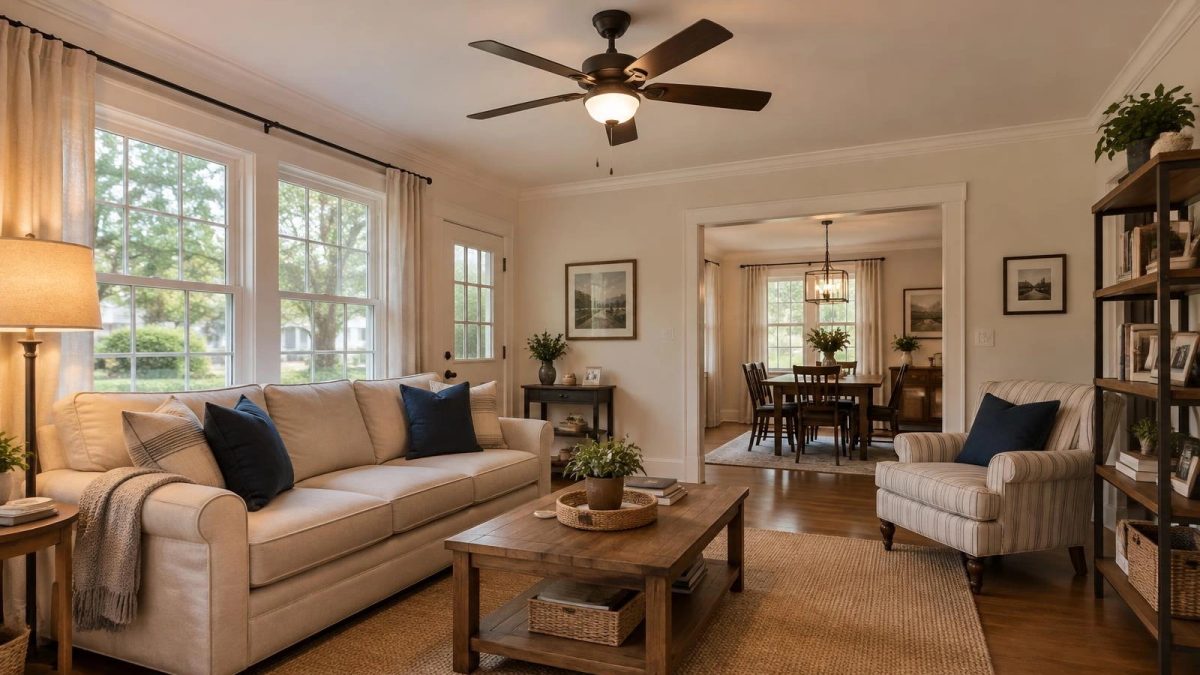
Step inside and the priorities change. A living room might host a lively family gathering one hour and a quiet evening on the sofa the next. In some Mississippi houses, it also opens straight into the dining area or kitchen. That makes one-size-fits-all advice about fan diameter pretty unhelpful.
A larger room may call for a broader blade span, but bigger isn’t always better. The useful questions are where people sit, how high the ceiling is, what the fan’s published airflow information says, and whether the fixture will be installed at the height its manufacturer recommends. A big fan hung awkwardly in the wrong place won’t solve a poor layout. Nor does a long list of blades guarantee stronger airflow.
For rooms that need both general lighting and a comfortable breeze, ceiling fans with lights can be a sensible starting point. Just don’t expect one fixture to handle every activity. A table lamp beside a reading chair and a floor lamp near the sofa can make the room more flexible without keeping the entire ceiling brightly lit all evening.
There’s also a practical distinction worth remembering in summer: a ceiling fan makes people feel cooler by moving air across their skin; it does not work like an air conditioner and lower the room’s temperature. It can complement the home’s cooling system while someone is there to enjoy the breeze. When the room is empty, leaving the fan spinning usually doesn’t help anyone.
Keep Kitchen and Dining Lighting Practical
In the kitchen, good lighting is less about atmosphere and more about seeing what you’re doing. Cutting vegetables under your own shadow or trying to check whether a pan is clean in a dim corner gets old quickly. Countertop lighting, well-positioned ceiling fixtures, and a light over the sink often do more useful work than one showy centerpiece.
The dining area has a different job. People want to see their food and one another without a bare bulb glaring across the table. A pendant or other overhead light can work well when it is properly positioned, with softer lighting nearby for evenings that turn into long conversations.
Air movement deserves its own thought here, particularly in an open-plan house. A ceiling fan can circulate air in an adjacent living area, but it isn’t a kitchen exhaust system. Cooking smoke, moisture, and odors call for suitable ventilation, ideally using a range hood that vents outdoors where practical and appropriate. Keep those two jobs separate when planning the space.
Choose Bedroom Comfort Around Sleep, Not Just Fan Size
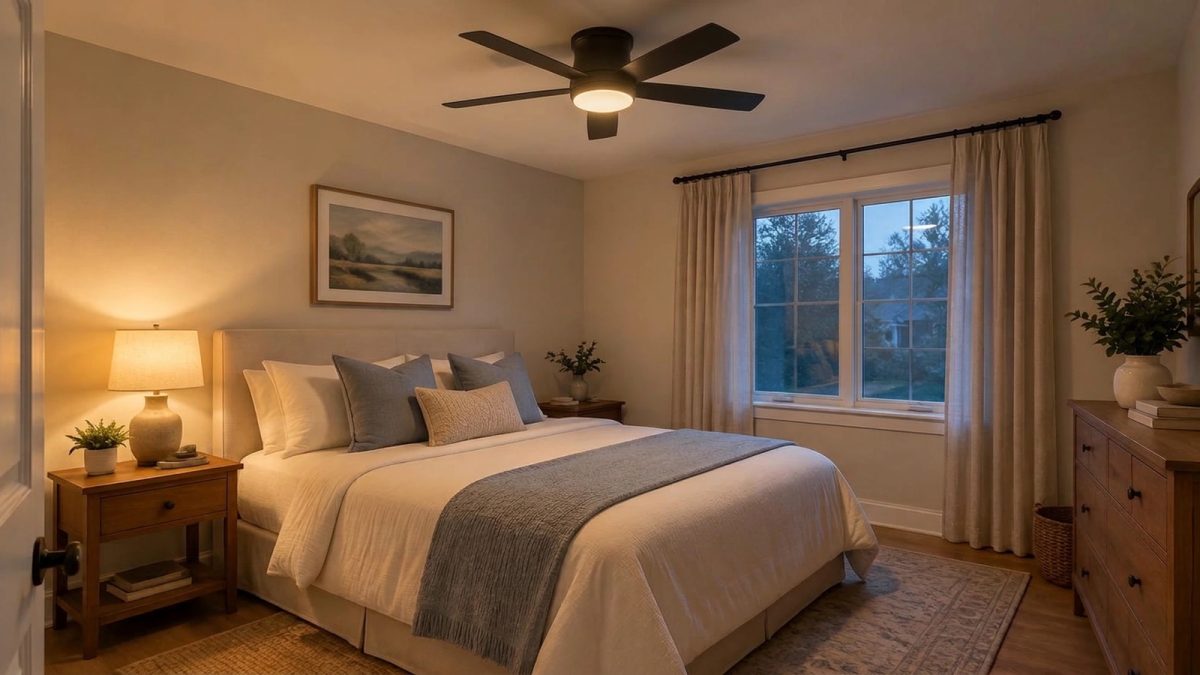
The bedroom is probably where small annoyances become most noticeable. A fan that sounded fine in the afternoon can seem loud at midnight. A bright white light that works for folding laundry may be the last thing anyone wants while getting ready for bed. And if the ceiling is low, a fixture that looked compact online may hang farther down than expected.
Start with what you need after dark. Look for fan speeds that include a genuinely gentle setting, controls that are easy to reach, and lighting options that fit the way you use the room. Some models offer dimming, timers, separate light control, or selectable color temperatures. Others don’t. The product’s actual controls matter more than a long list of buzzwords.
Don’t assume that a DC motor automatically makes a fan silent, either. The sound you hear depends on the whole setup, including the blades, installation, speed, and condition of the equipment. If quiet operation matters, look for model-specific information and pay attention to owner feedback that describes how the fan performs at night.
Where the ceiling height is limited, flush mount ceiling fans with lights may be worth comparing with standard downrod designs. They are built to sit closer to the ceiling, but the full installed depth still matters, especially when the light lens is the lowest part of the fixture. Measure before ordering, and make sure the particular mounting method is approved for that model.
Pay Attention to Ceiling Height and Installation Details
A ceiling fan can be the right style and still be the wrong fit. That’s why the measuring tape should come out before the shopping cart. Measure the room, note the ceiling height, and look at anything nearby that may interfere with the blades. In older homes, decorative beams, unusual ceiling angles, and existing light boxes can complicate an otherwise simple replacement.
Pay attention to the entire assembly, not just the advertised blade size. A light shade may hang lower than the blades. A downrod adds distance between the ceiling and the motor. A close-to-ceiling design can reduce that drop, but it can’t be improvised by removing parts from a fan that wasn’t approved for that installation. Sloped ceilings need their own check, too; not every bracket is meant for them.
The electrical box and ceiling support must also be appropriate for a moving ceiling fan, not merely a lightweight light fixture. Follow the installation guide for the exact model and have a qualified installer check the setup if the structure, wiring, or clearances are uncertain. It’s easier to sort that out before the new fan arrives than while someone is standing on a ladder holding it.
Let Lighting Follow How Each Space Is Used
Most of us don’t use a room the same way at seven in the morning and nine at night. On the porch, you may need enough light to see the steps and find the door lock, while the seating area can stay softer. In the living room, a lamp near the sofa may be all that’s needed after dinner. In the bedroom, a bright overhead fixture can give way to a small bedside light.
That doesn’t require expensive smart-home equipment. Separate switches, thoughtfully placed lamps, and dimming where the fixture actually supports it can go a long way. Warm-looking light may suit a relaxed evening, while more focused task lighting helps with reading or working. Neither color temperature nor brightness alone tells you whether a space will feel comfortable; placement and glare matter just as much.
The best test is an ordinary evening at home. Sit where you usually sit. Try to read. Walk from the porch into the house after dark. Notice the spots that are too bright, too dim, or awkward to control. Those everyday details are a better shopping guide than a staged photograph.
A Simple Room-by-Room Checklist Before Making Changes
Before replacing a fixture, jot down what each space needs and what the building will actually allow. You don’t need a complicated design plan. A short checklist will help you compare choices without losing track of the things that matter.
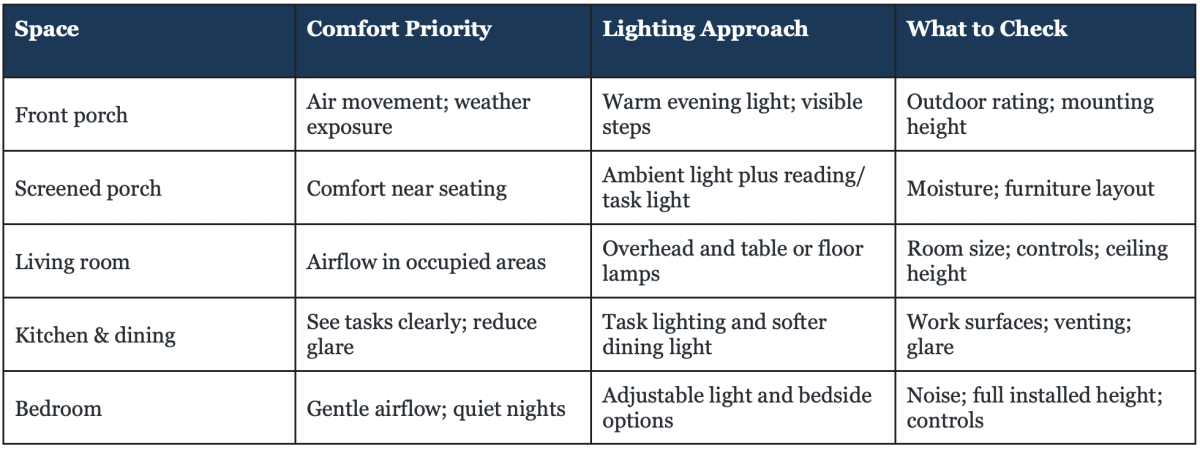
A sensible upgrade often starts small: move a lamp, improve lighting over a work surface, or confirm the outdoor rating of the fan you’ve been considering. Save the big purchases for after you’ve measured the space and checked the installation instructions. A little planning now can spare you the trouble of returning something that never quite fit.
A comfortable Southern home doesn’t need identical lighting or airflow in every room. The front porch, screened porch, living room, kitchen, and bedroom all have their own rhythms. Pay attention to how people use each spot, what they need to see, and what can be installed safely. Getting those ordinary details right is what makes a house feel good to live in.
Read more: Best Cooling Options for a Two-Car Garage
Read more: 3 Tips for Staying Cool in the Southern Summer Heat
The post From Porch to Bedroom: Practical Lighting and Airflow Choices for Southern Homes appeared first on The Clinton Courier.
It’s the same house, yet each space asks for something different. That’s why a good lighting and airflow plan isn’t about buying matching fixtures for every room. It’s about noticing where people spend time, what they’re doing there, and what will make that particular spot easier to enjoy.
Start With the Front Porch: Shade, Air Movement, and Evening Light
A Southern porch earns its keep in small ways. It’s where a neighbor stops to talk, where the morning coffee tastes a little better, and where a family may sit after supper when the sun finally drops behind the trees. But a pretty porch isn’t necessarily a comfortable one. Afternoon sun can reach under the roof, humidity can linger, and one bright light beside the door can make the rest of the space look dark.
Start with the shade. Watch how the sun moves across the porch and where people actually sit. Curtains or well-placed shades may help with glare, provided they suit the weather and don’t block the path through the entrance. Once you’ve figured out the seating area, think about gentle air movement and lighting that lets people see the steps, the doorway, and each other.
In a protected outdoor seating area, outdoor ceiling fans with lights may be worth considering because they combine overhead light with a breeze where people gather. But the words ‘outdoor’ or ‘porch’ in a product photograph don’t tell the whole story. A fan protected from direct rain may have different location requirements from one that can be exposed to wind-driven water. Check the specific model’s damp- or wet-location rating, mounting instructions, and clearance before making a choice.
And if your porch has one of those pale blue ceilings sometimes called haint blue, there’s no need to turn it into a pest-control project. It’s a familiar Southern design tradition, not a substitute for screens or other practical ways of keeping insects out.
Make a Screened Porch Comfortable Without Overcomplicating It
A screened porch feels like a room, but it doesn’t behave exactly like one. Screens let the breeze through and help keep insects away. They don’t keep out humid air, and a hard rain can still reach furniture or fixtures depending on how the porch is built. That matters when you’re choosing anything that lives near the ceiling.
The best arrangement often starts with the furniture rather than the equipment. If everyone gathers around one table, the light should make that table pleasant to use. If there’s a reading chair tucked into a corner, a separate lamp may work better than trying to flood the entire porch with overhead light. On a long, narrow porch, pay attention to the places air seems to miss before deciding whether the space needs one fan or more than one.
It is also worth keeping the labels straight. A screened porch isn’t automatically a four-season room, even when it has curtains or retractable panels. If you’re planning to enclose and condition the space, that’s a bigger project involving the building envelope, ventilation, and possibly permits. For an ordinary screened porch, make the seating comfortable first and leave the complicated upgrades for when there’s a clear reason to do them.
Give the Living Room Enough Airflow Without Overpowering the Space
Step inside and the priorities change. A living room might host a lively family gathering one hour and a quiet evening on the sofa the next. In some Mississippi houses, it also opens straight into the dining area or kitchen. That makes one-size-fits-all advice about fan diameter pretty unhelpful.
A larger room may call for a broader blade span, but bigger isn’t always better. The useful questions are where people sit, how high the ceiling is, what the fan’s published airflow information says, and whether the fixture will be installed at the height its manufacturer recommends. A big fan hung awkwardly in the wrong place won’t solve a poor layout. Nor does a long list of blades guarantee stronger airflow.
For rooms that need both general lighting and a comfortable breeze, ceiling fans with lights can be a sensible starting point. Just don’t expect one fixture to handle every activity. A table lamp beside a reading chair and a floor lamp near the sofa can make the room more flexible without keeping the entire ceiling brightly lit all evening.
There’s also a practical distinction worth remembering in summer: a ceiling fan makes people feel cooler by moving air across their skin; it does not work like an air conditioner and lower the room’s temperature. It can complement the home’s cooling system while someone is there to enjoy the breeze. When the room is empty, leaving the fan spinning usually doesn’t help anyone.
Keep Kitchen and Dining Lighting Practical
In the kitchen, good lighting is less about atmosphere and more about seeing what you’re doing. Cutting vegetables under your own shadow or trying to check whether a pan is clean in a dim corner gets old quickly. Countertop lighting, well-positioned ceiling fixtures, and a light over the sink often do more useful work than one showy centerpiece.
The dining area has a different job. People want to see their food and one another without a bare bulb glaring across the table. A pendant or other overhead light can work well when it is properly positioned, with softer lighting nearby for evenings that turn into long conversations.
Air movement deserves its own thought here, particularly in an open-plan house. A ceiling fan can circulate air in an adjacent living area, but it isn’t a kitchen exhaust system. Cooking smoke, moisture, and odors call for suitable ventilation, ideally using a range hood that vents outdoors where practical and appropriate. Keep those two jobs separate when planning the space.
Choose Bedroom Comfort Around Sleep, Not Just Fan Size
The bedroom is probably where small annoyances become most noticeable. A fan that sounded fine in the afternoon can seem loud at midnight. A bright white light that works for folding laundry may be the last thing anyone wants while getting ready for bed. And if the ceiling is low, a fixture that looked compact online may hang farther down than expected.
Start with what you need after dark. Look for fan speeds that include a genuinely gentle setting, controls that are easy to reach, and lighting options that fit the way you use the room. Some models offer dimming, timers, separate light control, or selectable color temperatures. Others don’t. The product’s actual controls matter more than a long list of buzzwords.
Don’t assume that a DC motor automatically makes a fan silent, either. The sound you hear depends on the whole setup, including the blades, installation, speed, and condition of the equipment. If quiet operation matters, look for model-specific information and pay attention to owner feedback that describes how the fan performs at night.
Where the ceiling height is limited, flush mount ceiling fans with lights may be worth comparing with standard downrod designs. They are built to sit closer to the ceiling, but the full installed depth still matters, especially when the light lens is the lowest part of the fixture. Measure before ordering, and make sure the particular mounting method is approved for that model.
Pay Attention to Ceiling Height and Installation Details
A ceiling fan can be the right style and still be the wrong fit. That’s why the measuring tape should come out before the shopping cart. Measure the room, note the ceiling height, and look at anything nearby that may interfere with the blades. In older homes, decorative beams, unusual ceiling angles, and existing light boxes can complicate an otherwise simple replacement.
Pay attention to the entire assembly, not just the advertised blade size. A light shade may hang lower than the blades. A downrod adds distance between the ceiling and the motor. A close-to-ceiling design can reduce that drop, but it can’t be improvised by removing parts from a fan that wasn’t approved for that installation. Sloped ceilings need their own check, too; not every bracket is meant for them.
The electrical box and ceiling support must also be appropriate for a moving ceiling fan, not merely a lightweight light fixture. Follow the installation guide for the exact model and have a qualified installer check the setup if the structure, wiring, or clearances are uncertain. It’s easier to sort that out before the new fan arrives than while someone is standing on a ladder holding it.
Let Lighting Follow How Each Space Is Used
Most of us don’t use a room the same way at seven in the morning and nine at night. On the porch, you may need enough light to see the steps and find the door lock, while the seating area can stay softer. In the living room, a lamp near the sofa may be all that’s needed after dinner. In the bedroom, a bright overhead fixture can give way to a small bedside light.
That doesn’t require expensive smart-home equipment. Separate switches, thoughtfully placed lamps, and dimming where the fixture actually supports it can go a long way. Warm-looking light may suit a relaxed evening, while more focused task lighting helps with reading or working. Neither color temperature nor brightness alone tells you whether a space will feel comfortable; placement and glare matter just as much.
The best test is an ordinary evening at home. Sit where you usually sit. Try to read. Walk from the porch into the house after dark. Notice the spots that are too bright, too dim, or awkward to control. Those everyday details are a better shopping guide than a staged photograph.
A Simple Room-by-Room Checklist Before Making Changes
Before replacing a fixture, jot down what each space needs and what the building will actually allow. You don’t need a complicated design plan. A short checklist will help you compare choices without losing track of the things that matter.
A sensible upgrade often starts small: move a lamp, improve lighting over a work surface, or confirm the outdoor rating of the fan you’ve been considering. Save the big purchases for after you’ve measured the space and checked the installation instructions. A little planning now can spare you the trouble of returning something that never quite fit.
A comfortable Southern home doesn’t need identical lighting or airflow in every room. The front porch, screened porch, living room, kitchen, and bedroom all have their own rhythms. Pay attention to how people use each spot, what they need to see, and what can be installed safely. Getting those ordinary details right is what makes a house feel good to live in.
Read more: Best Cooling Options for a Two-Car Garage
Read more: 3 Tips for Staying Cool in the Southern Summer Heat
The post From Porch to Bedroom: Practical Lighting and Airflow Choices for Southern Homes appeared first on The Clinton Courier.