About 931 minutes
Marion Fay: A Novel — Key Ideas to Explore
Historical Psychological Social Fiction
214,078 recorded words. 39 minutes difference from this book's estimate.
View Gutenberg source #30100
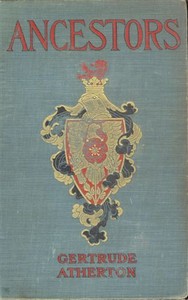
The source record for Ancestors: A Novel — Edition Insights measures this digital text at 205,106 words, 14 hr 52 min estimated reading time, and 17 detected text sections.
The text analysis averages about 19.6 words per sentence, while the detected sections provide another way to judge how the source is divided.
Project Gutenberg metadata also associates the work with “England -- Fiction,” connecting these edition facts with the source record’s subject description.
Explore this collection
These alternatives are selected using recorded categories and estimated reading time.
About 931 minutes
Historical Psychological Social Fiction
214,078 recorded words. 39 minutes difference from this book's estimate.
View Gutenberg source #30100About 841 minutes
Historical Psychological Social Fiction
193,424 recorded words. 51 minutes difference from this book's estimate.
View Gutenberg source #21249About 949 minutes
Historical Psychological Social Fiction
218,176 recorded words. 57 minutes difference from this book's estimate.
View Gutenberg source #20085Search stored excerpts and compare books → Choose by your preferences →
Choices use stored catalog measurements. Estimates vary with reading speed. A shared category is a catalog label, not a claim that two books have the same argument or literary quality.
Search reads excerpt text stored with this catalog and links to its associated Gutenberg record. The connection is stored in the site database; this tool does not recheck that every excerpt is word-for-word identical to that external record. Excerpt search does not cover every chapter and does not verify historical publication dates.
Catalog snapshot checked: 2026-09-25. Coverage: 95 public books, 95 available source excerpts.
Read the complete public-domain text at its original source.
Read on Project GutenbergFrom its first pages, Ancestors establishes a world where social position is both a weapon and a cage. The opening scene introduces Miss Thangue, a paid companion who must read her patron-friend Victoria Gwynne with 'delicate touch,' aware that even the 'ancestral dames of Capheaton' scrutinize the enigmatic aristocrat. Atherton immediately signals that this is a novel about the performance of class: Flora Thangue has 'learned to be audacious without taking a liberty,' a phrase that encapsulates the precarious balancing act required of those without independent means. The narrative voice is coolly analytical, dissecting motives and social calculations with a precision that suggests the author's own familiarity with transatlantic hierarchies.
The title Ancestors is no mere decoration. Atherton repeatedly tests the value of inherited status against the fluid social landscape of early twentieth-century California. In one excerpt, Victoria Gwynne's companion notes that her friend's hand has never trembled 'among the teacups'—a small but telling detail that links composure to breeding. Later, when the Englishman Gwynne observes a San Francisco restaurant, he finds the women 'utterly unindividual' compared to their New York counterparts, yet notes that the room's inhabitants 'looked gay and care-free' and that 'their personalities were not wholly obscured by clothes.' This tension between surface and substance, between the uniform of fashion and the expression of self, runs through the fragments. Atherton is less interested in praising one culture over another than in exposing the anxieties that arise when two systems of value collide.
Clothing functions as a primary language of status and transgression. The most vivid example is the character Paula, whose 'screaming red blouse, immense cheap red hat, blazing cheeks, pinched waist' and 'pointed bronze slipper with a large red bow' mark her as common—'South of Market Street Chippy' in local parlance. Isabel, watching her descend the stairs, has 'a sudden vision of the shanty at the northern base of Russian Hill' where Paula's mother was found, and wishes for a moment that her mother had sent Paula 'to a foundling asylum.' The passage is remarkable for its unsparing social judgment, delivered through Isabel's internal monologue. Atherton does not soften the cruelty of class disgust; instead, she lets it stand as a measure of the distance between the 'lady' and the woman who looks 'common, fast.' The narrator's eye for costume is forensic, and the reader is left to weigh the fairness of such judgments.
Several characters in the excerpts occupy the role of observer, and Atherton uses their perspectives to layer social commentary. Flora Thangue, the paid companion, has 'learned to be audacious without taking a liberty' and prides herself on reading 'this enigma' Victoria Gwynne. Her position—dependent yet shrewd—gives her insights unavailable to those higher on the social ladder. Similarly, Gwynne, the Englishman, looks around the San Francisco restaurant 'with something of the curiosity of a Columbus,' a simile that casts him as both explorer and outsider. The narrative itself adopts a detached, almost anthropological tone when describing the restaurant's 'strange assortment of types' and the 'higher walks of Bohemia.' These observing figures create a layered effect: the reader watches characters who are themselves watching, and the novel becomes a study in how social identity is performed, perceived, and judged.
The excerpts of Ancestors offer a fragmented but revealing portrait of a novelist interested in the friction between inherited codes and American individualism. Atherton's prose is precise, her eye for social detail unsparing. Readers attentive to the nuances of dress, gesture, and the unspoken rules of class will find much to analyze. The complete novel likely deepens these tensions across its three parts, but even in these passages, the central drama is clear: what does it mean to be a lady—or a gentleman—when the old certainties no longer hold?
There’s something in Atherton’s sharp-eyed exile, watching California’s raw manners from her inherited distance, that reminds me of the quieter ache in The Wings of the Dove, Volume 1 of 2 — Context and Discussion—how we carry our old codes into places that don’t recognize them. I still think about that strange loneliness, the way belonging slips through your fingers when you’re not looking.
Your answers remain private and are stored only in this browser.